Filters

Changing any of the form inputs will cause the list of events to refresh with the filtered results.

Mule Carts in Beijing: Knowledge and Ignorance in Transportation Planning in the 1950s

Via Zoom

ABSTRACT Economic planning in socialist China required the local planners to gather comprehensive information within their jurisdiction on one hand and implement centrally issued plan on the other. The dual challenge of knowing the real economy and following ever shifting policy targets is particularly daunting in pre-mechanized sectors. Taking the 1950s Beijing transportation as a […]
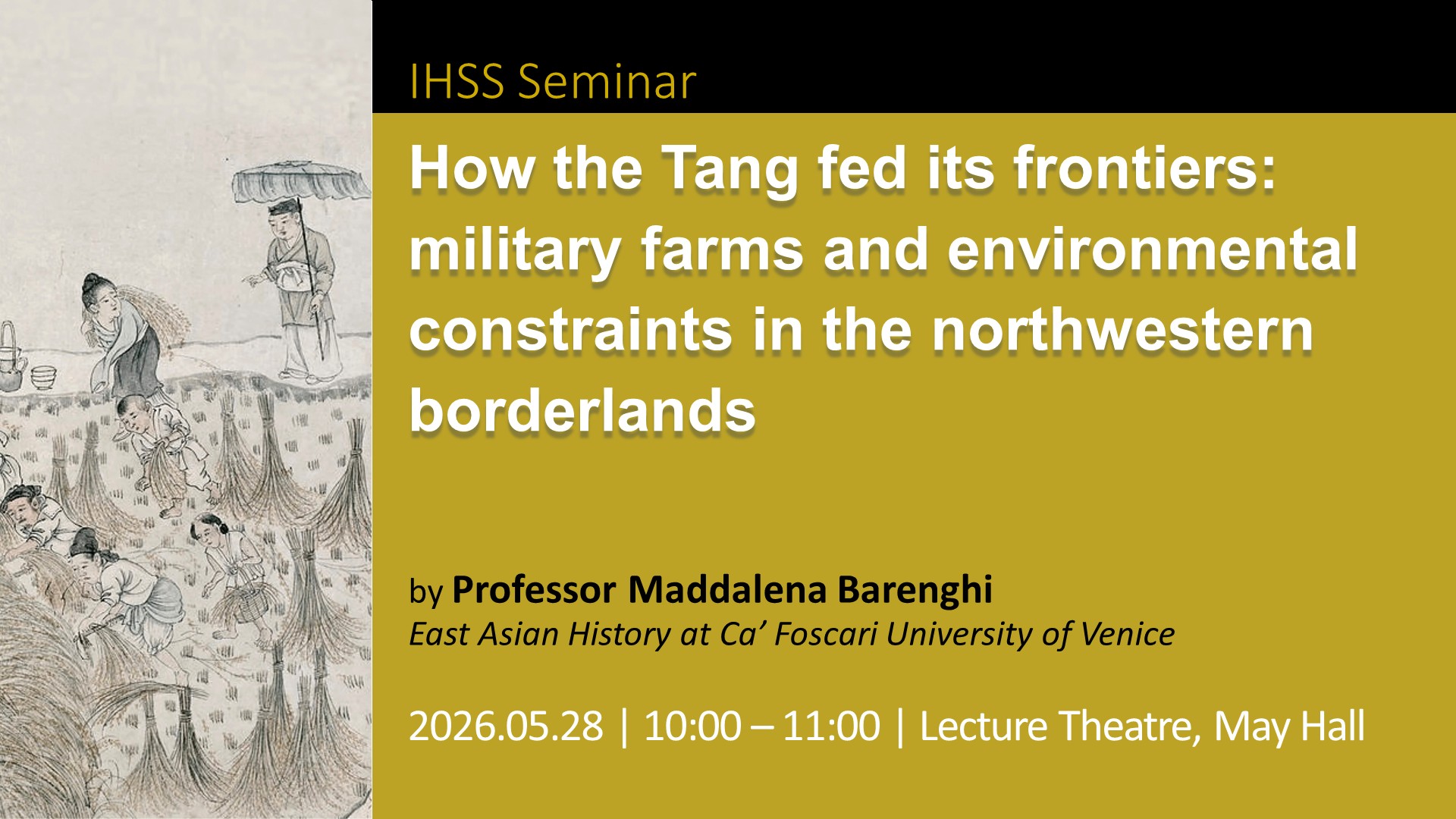
How the Tang fed its frontiers: military farms and environmental constraints in the northwestern borderlands

G01, May Hall, The University of Hong Kong

Description During the first millennium of imperial history, East Asian empires expanded into the semi-arid zones of Inner Asia and established agricultural settlements to sustain frontier garrisons. Under the tuntian system, soldier-farmers cultivated land to provision troops and livestock. A comprehensive analysis of how this agricultural system operated and its limits, accounting for environmental and […]

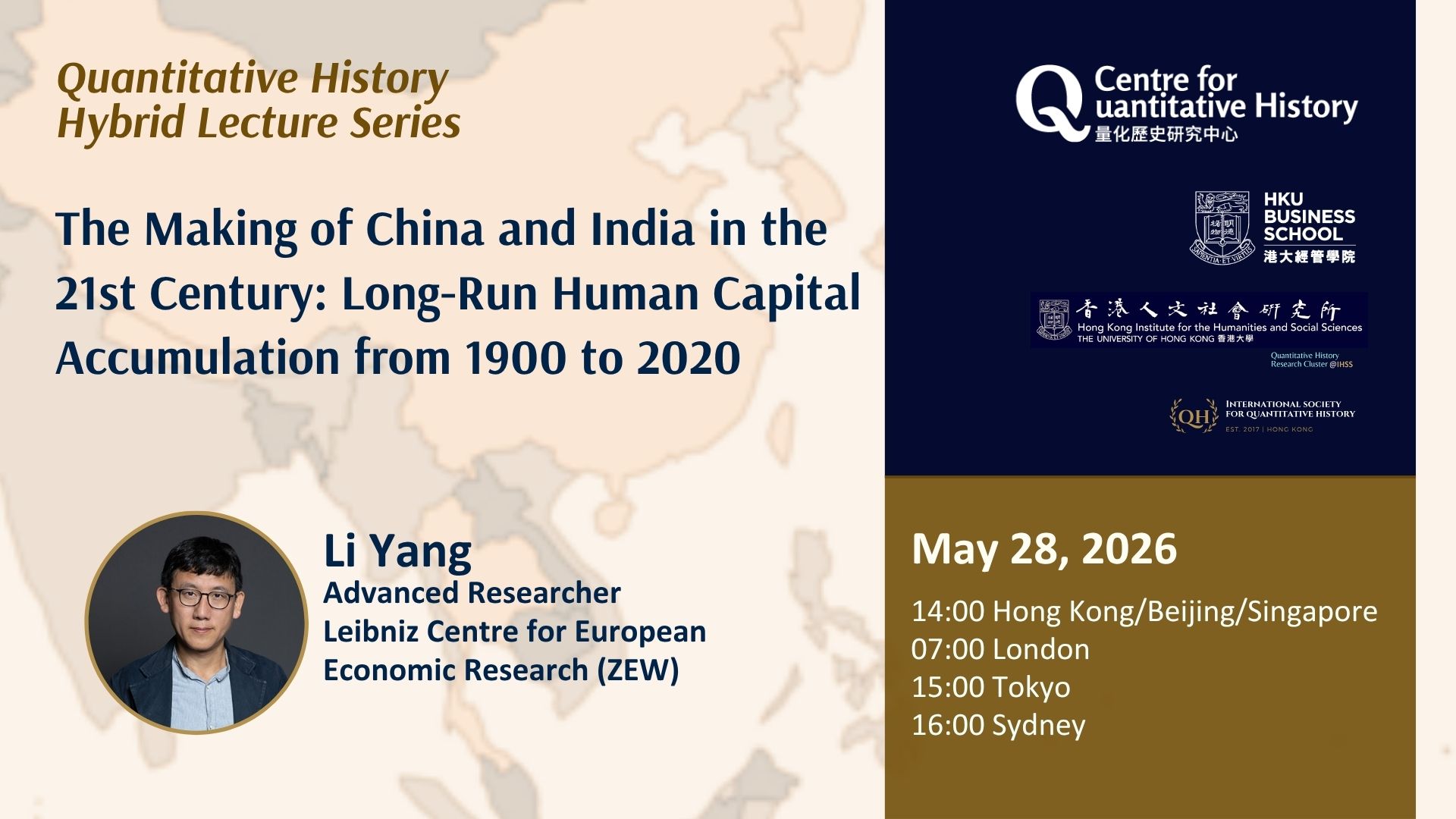
The Making of China and India in the 21st Century: Long-Run Human Capital Accumulation from 1900 to 2020

Lecture Hall, G/F, May Hall , Hong Kong

Description In this Quantitative History hybrid lecture, Li Yang of the Leibniz Centre for European Economic Research (ZEW) will present new evidence on the divergence in economic growth between China and India from the 1980s onward, focusing on how human capital accumulation evolved in each country. The talk will draw on a novel dataset covering […]

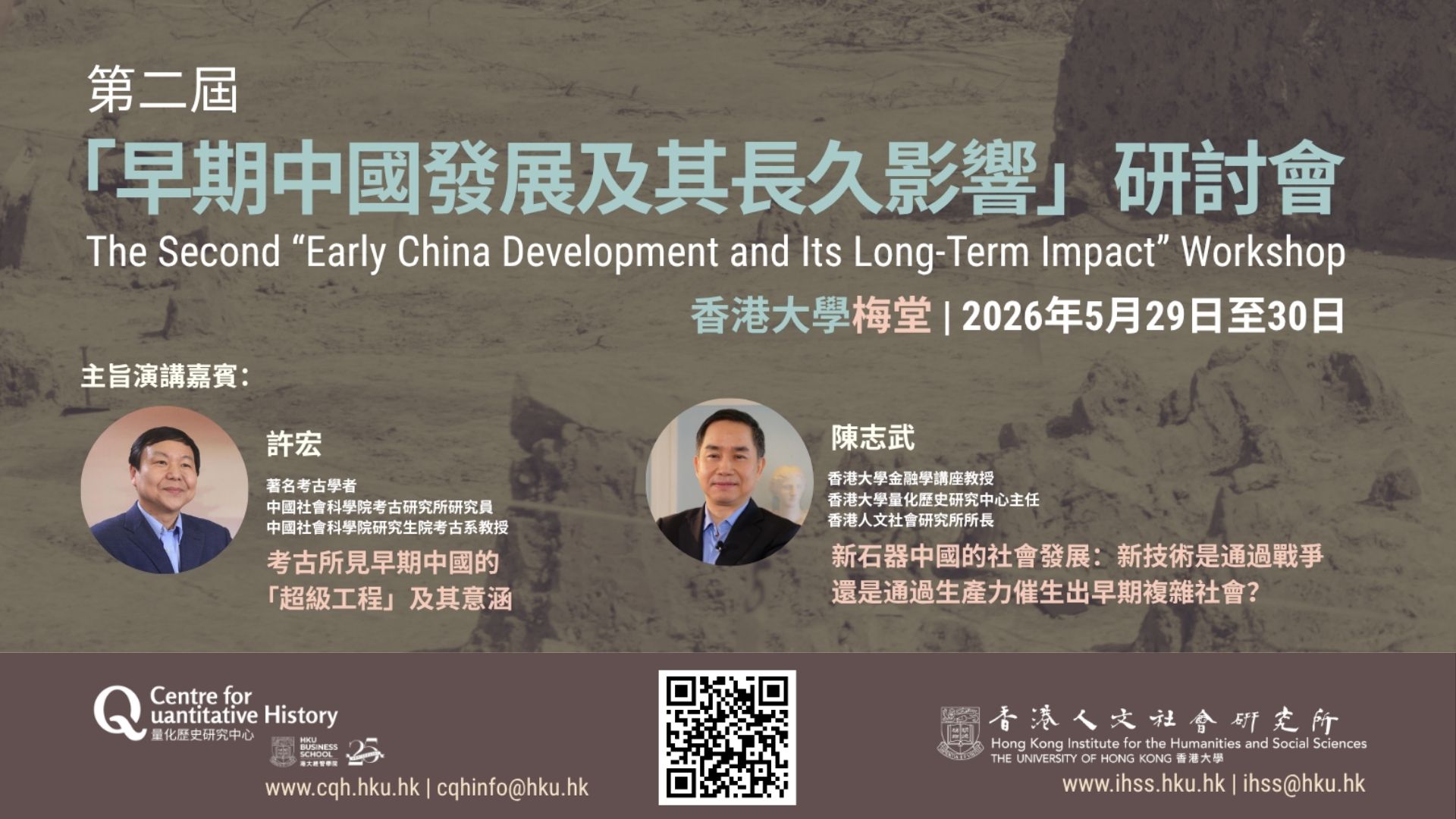
第二屆 “早期中國發展及其長久影響”研討會 The Second “Early China Development and Its Long-Term Impact” Workshop

May Hall, The University of Hong Kong

Event Highlights What can stone tools tell us about the rise of complex societies? Did iron technology strengthen states through farming, warfare or both? How might bronze inscriptions, burial goods, ancient bodies and administrative records help us understand the long-term development of China? These questions were at the centre of the Second “Early China Development […]

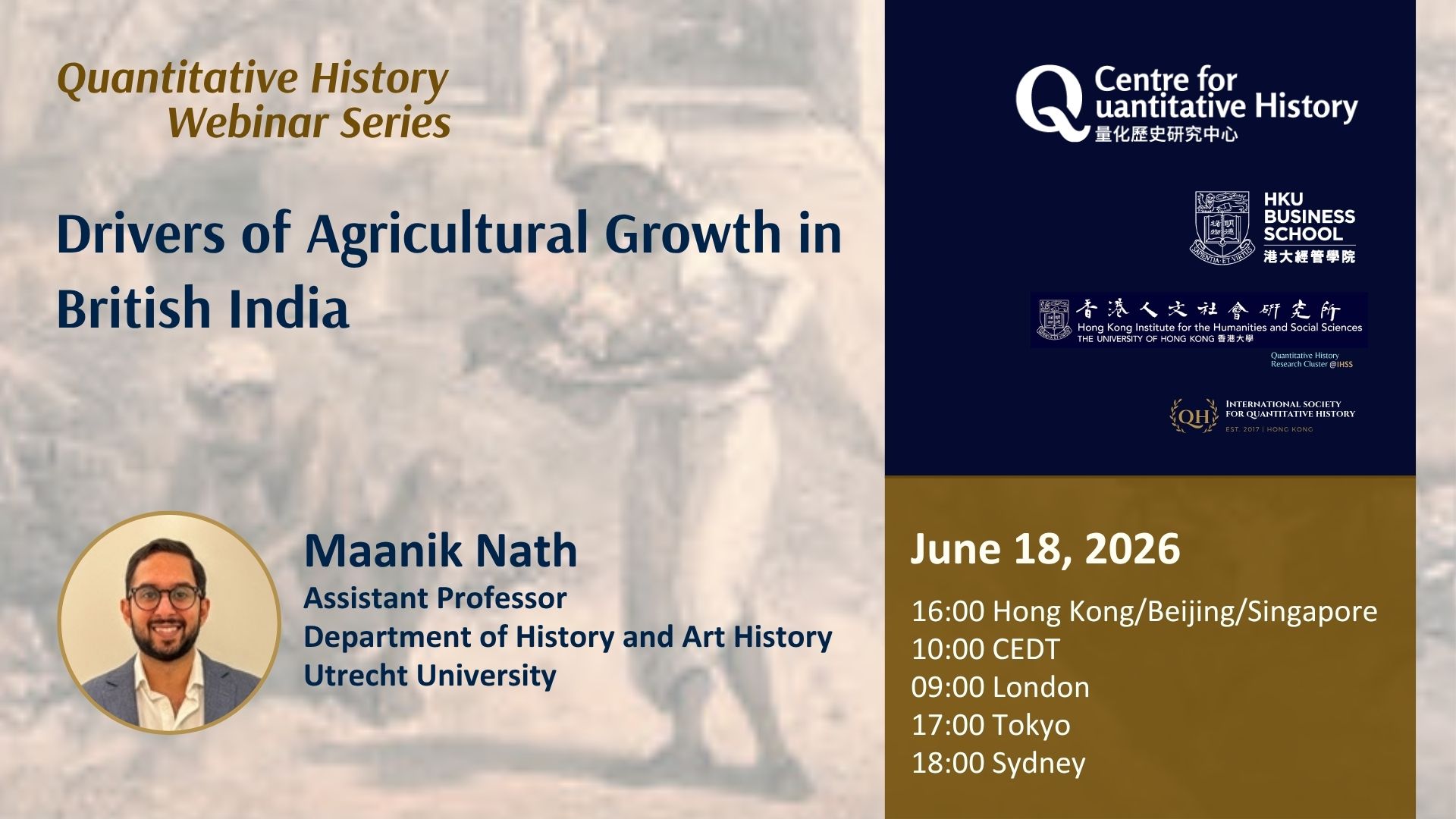
Drivers of Agricultural Growth in British India

Via Zoom

Table of Contents   Description Maanik Nath of Utrecht University and his co-author investigate the impact of public investments on agricultural incomes across colonial India. Using new data in a difference-in-differences framework, it shows that districts with access to canal irrigation experienced a 22% increase in agricultural incomes, alongside a three to six percentage-point decline […]

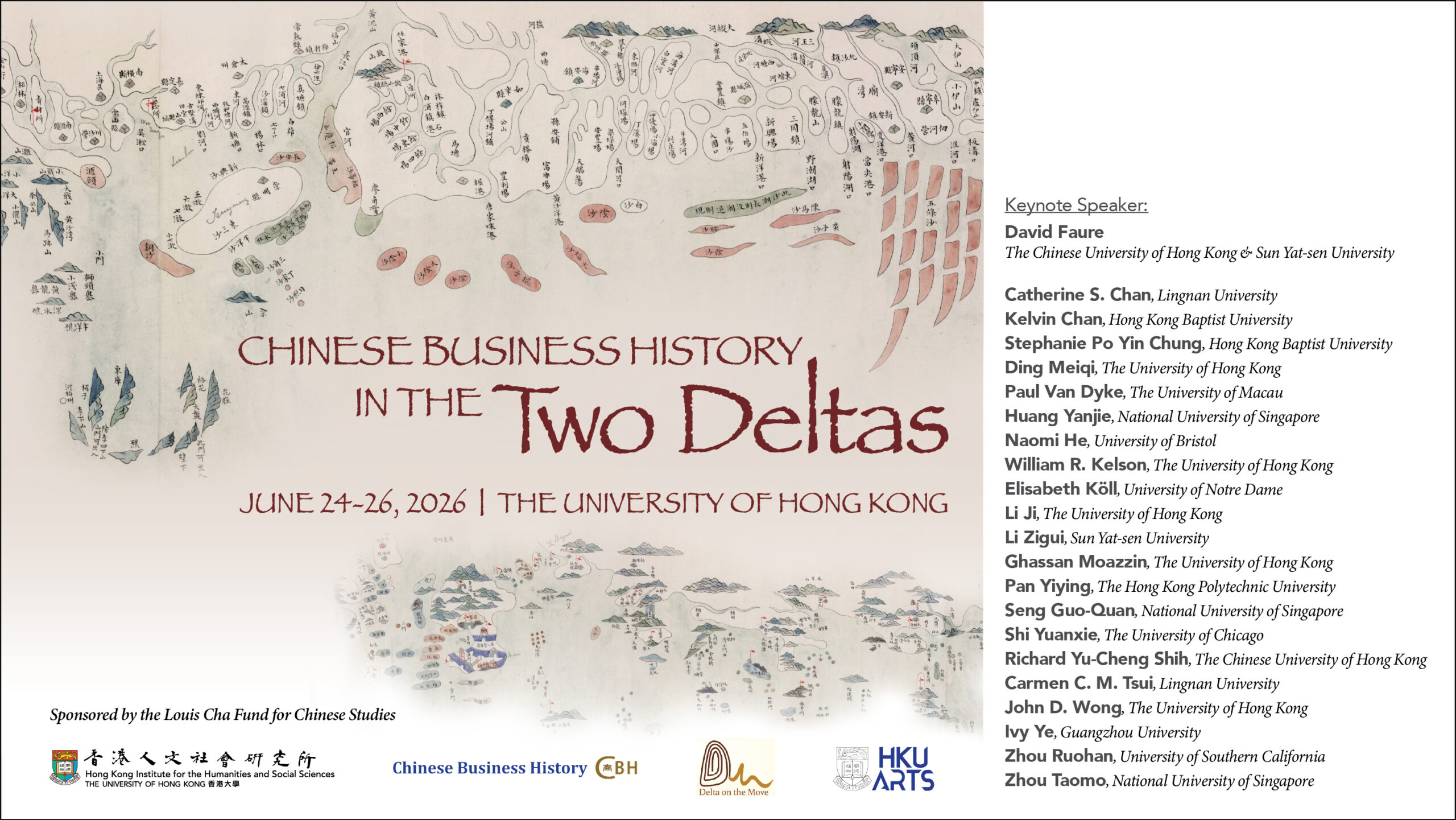
Chinese Business History in The Two Deltas

Run Run Shaw Tower, Centennial Campus , Hong Kong

Conference Program (PDF version with full abstracts) Chinese Business History in the Two Deltas 24 June 1.30pm-2pm: Registration Location: Run Run Shaw Tower, Centennial Campus 2pm: Welcome Location: Run Run Shaw Tower, Centennial Campus   Panel 1: 2.15pm-4.15pm: Chair: Ghassan Moazzin (The University of Hong Kong) Location: Run Run Shaw Tower, Centennial Campus Paul Van […]

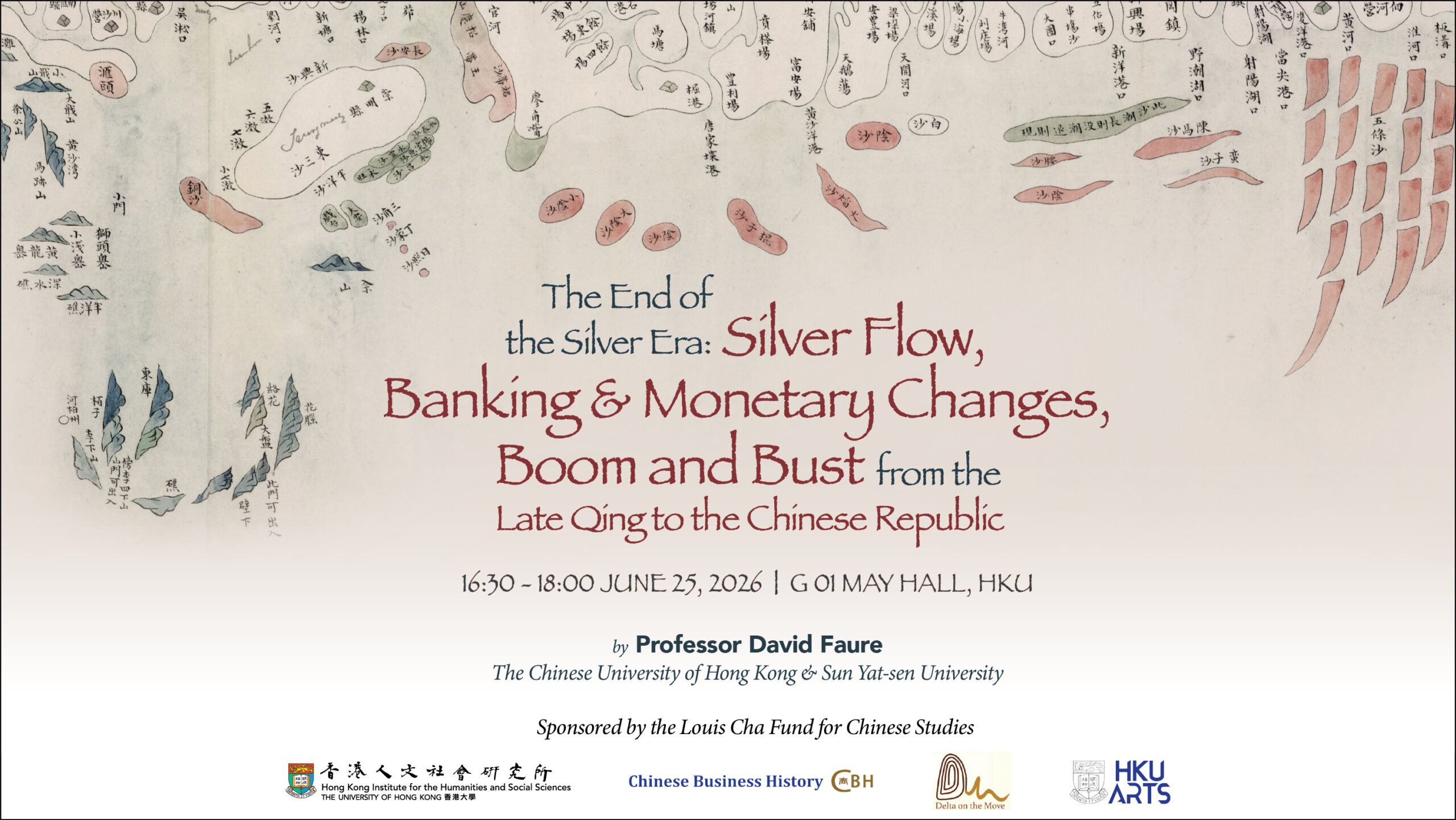
The End of the Silver Era: Silver Flow, Banking and Monetary Changes, Boom and Bust from the late Qing to the Chinese Republic

G01, May Hall, The University of Hong Kong

Table of Contents   Abstract Historians know very little about the movements of silver within China for all of the Qing dynasty and yet some understanding of them is crucial for appreciating how the country fitted together as a monetary whole. They also mattered to the development of currency and banking in the last decades […]

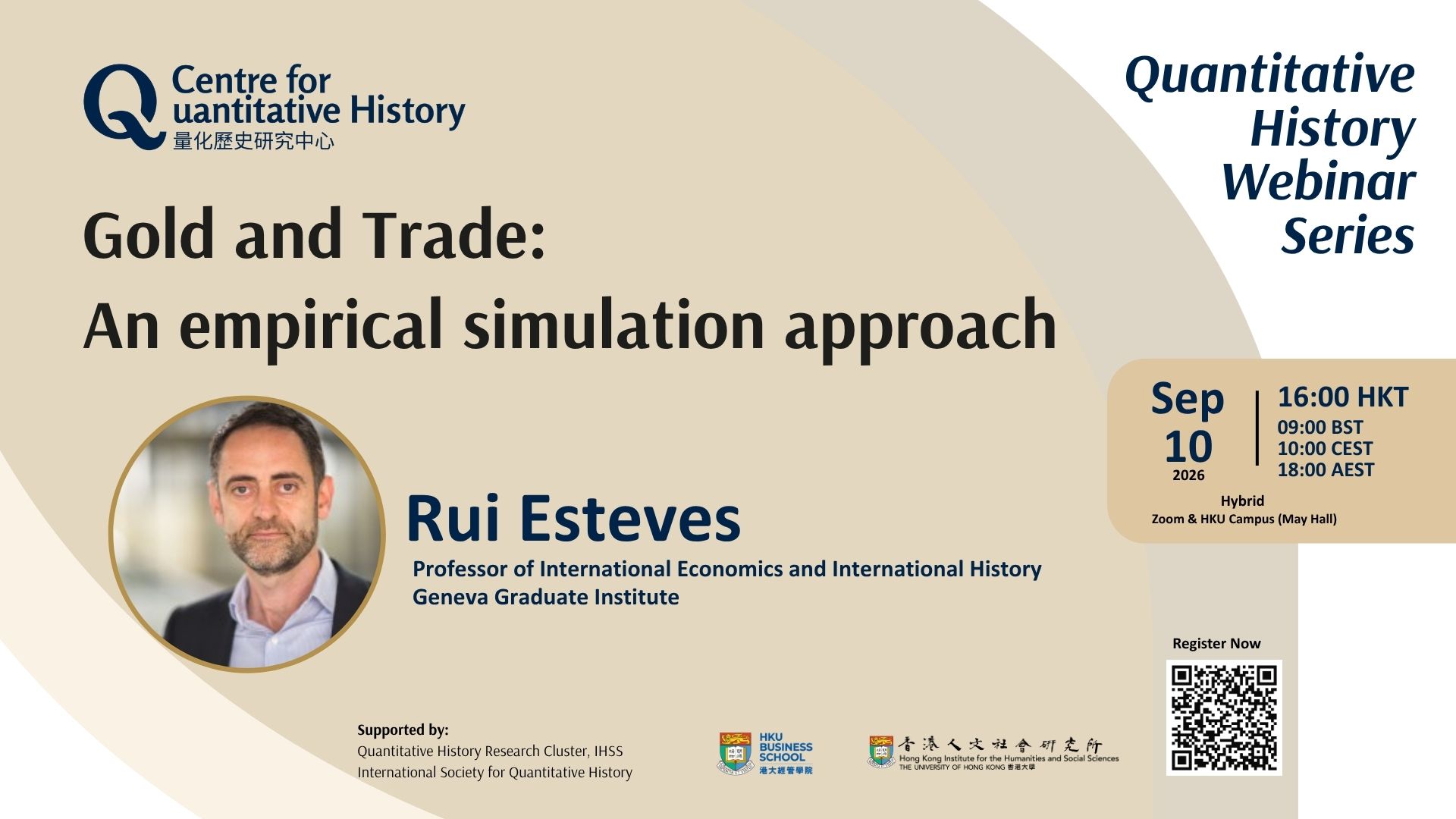
Gold and Trade: An Empirical Simulation Approach

Lecture Hall, G/F, May Hall, The University of Hong Kong, or Via Zoom , Hong Kong

Table of Contents   Description Rui Esteves of Geneva Graduate Institute and his co-authors examine the rise of the classical gold standard from the 1860s to World War I through the reciprocal relationship between trade and monetary regimes. Existing gravity estimates cannot identify this relation cleanly because trade and regime choice are jointly endogenous and […]

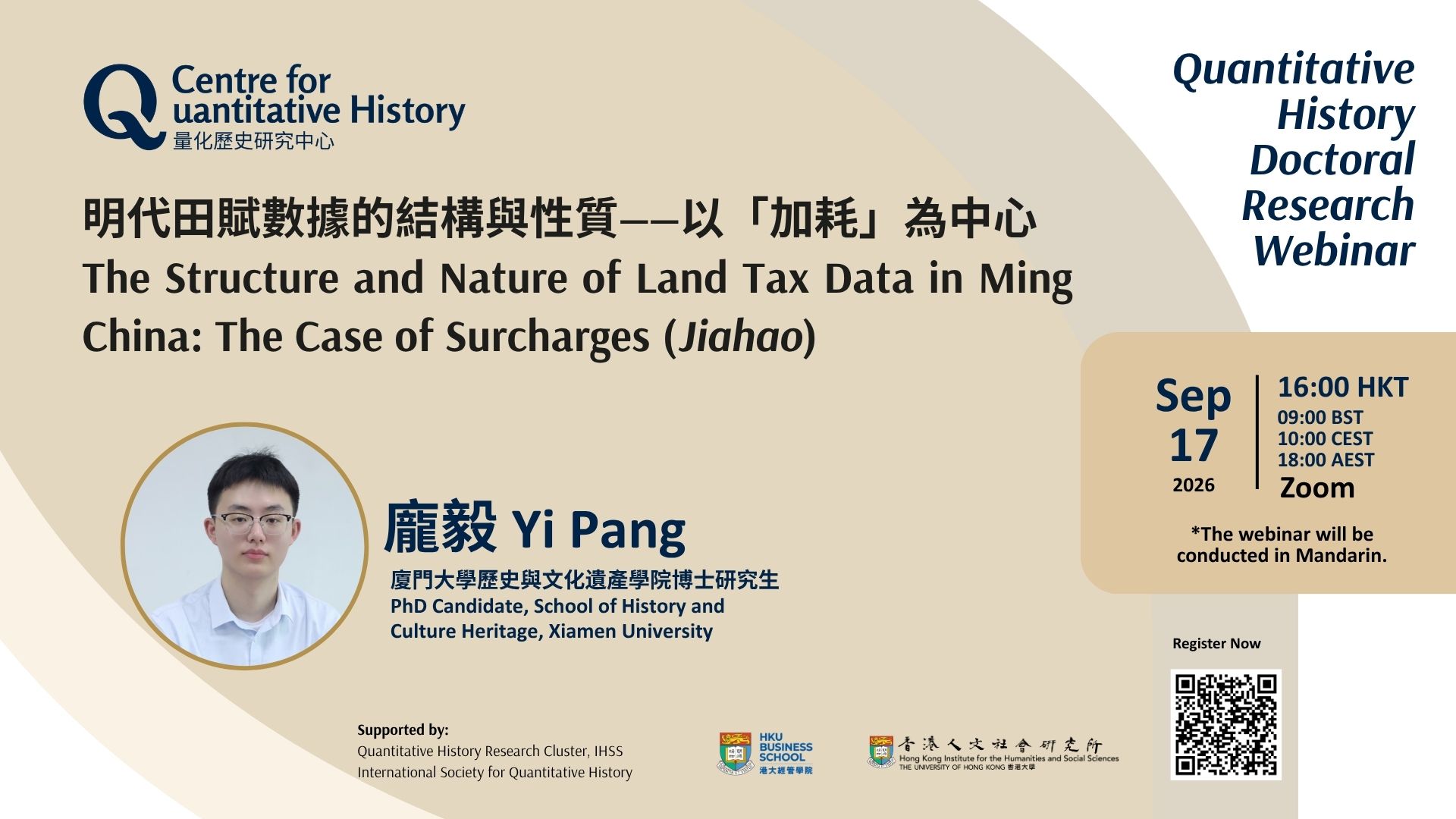
Doctoral Research Webinar | 明代田賦數據的結構與性質——以「加耗」為中心 The Structure and Nature of Land Tax Data in Ming China: The Case of Surcharges

Via Zoom

Table of Contents   Description 明代田賦數據的結構與性質——以「加耗」為中心 明代田賦數據普遍存在結構性缺失,這在「加耗」這一問題上得以集中體現。 加耗的遺漏,導致明代田賦數據難以反映真實稅制全貌。 這些不完整數據的背後,其實是中央與地方財政會計視角的根本差異,中央政府只關注入庫淨額的「歲入」,而地方政府需負擔包括加耗在內的全部「稅負」。 廈門大學歷史與文化遺產學院博士研究生龐毅通過計算加耗率,更清晰地闡述明代田賦數據的結構與性質,以及恢復地方政府的實際稅額。 The Structure and Nature of Land Tax Data in Ming China: The Case of Surcharges (Jiahao) Ming land tax data are characterised by widespread structural omissions, most clearly illustrated by the exclusion of surcharges (jiahao). These omissions limit the extent to which the data capture […]

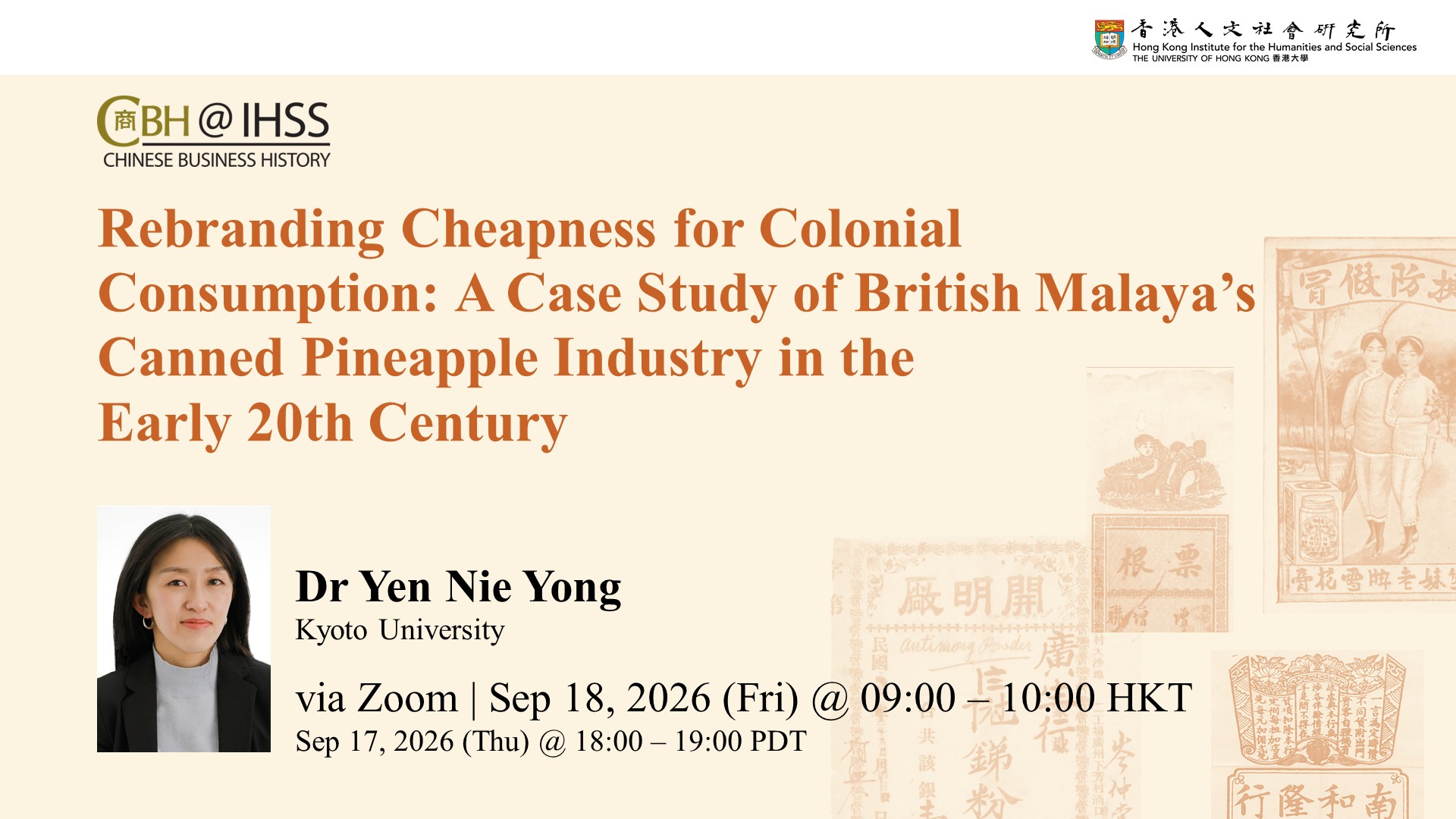
Rebranding Cheapness for Colonial Consumption: A Case Study of British Malaya’s Canned Pineapple Industry in the Early 20th Century

Via Zoom

Table of Contents Abstract In early twentieth-century Britain, the Malayan pineapple was the cheapest yet most-consumed canned fruit, largely produced by Chinese enterprises in British Malaya. Existing scholarship treats this cheapness as a byproduct of colonial frameworks that prioritized rubber, and attributes Britain's demand to Depression-era hardship. Drawing on colonial newspapers and Empire Marketing Board […]

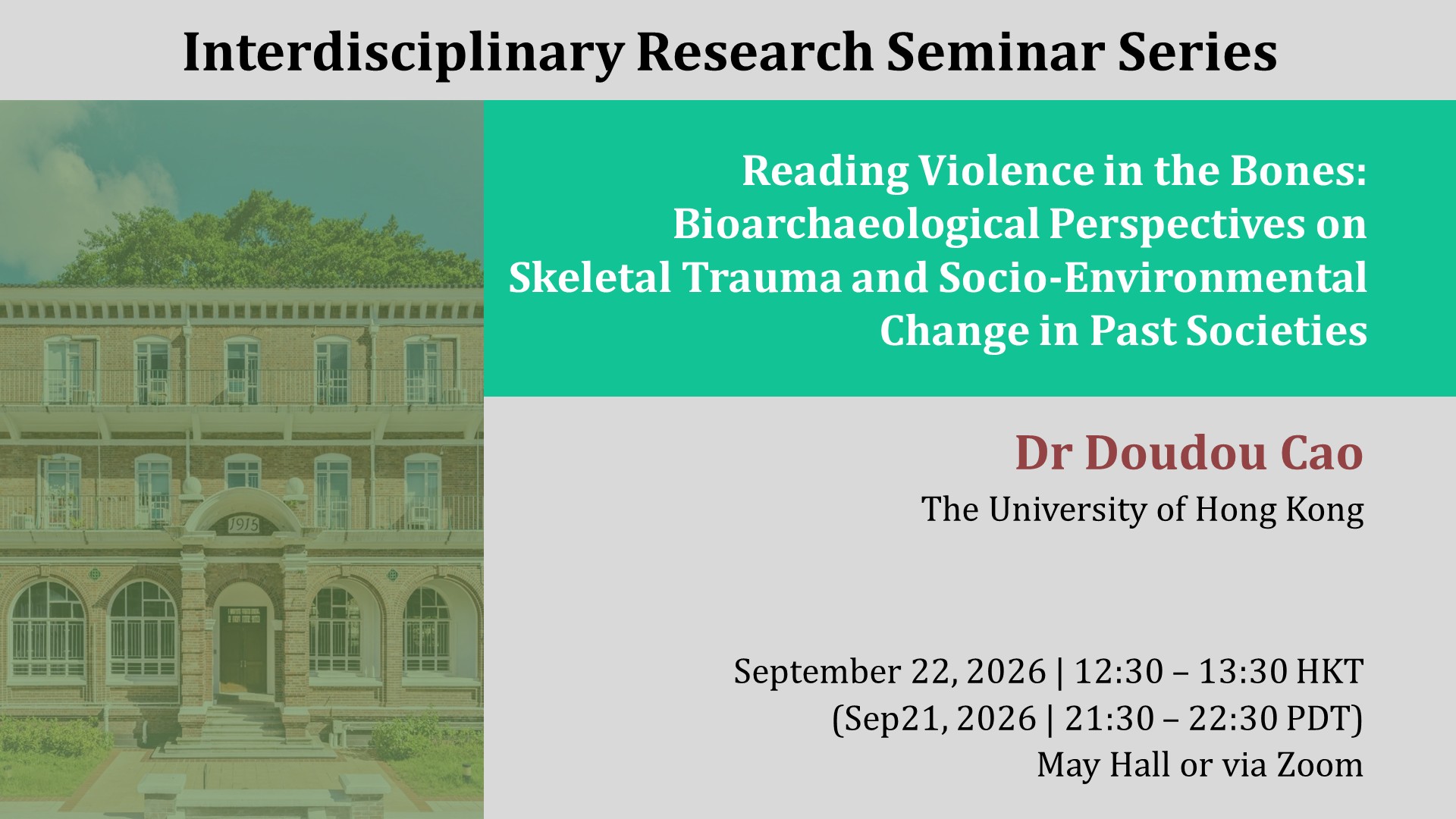
Reading Violence in the Bones: Bioarchaeological Perspectives on Skeletal Trauma and Socio-Environmental Change in Past Societies

G12, May Hall or via Zoom

Table of Contents   Abstract While violence in past societies has traditionally been inferred from weapons, fortifications, and texts, skeletal remains offer direct, long-term evidence of interpersonal conflict. This talk reviews how recent bioarchaeological studies have used skeletal trauma, especially cranial and weapon-related injuries, to examine interpersonal violence and peace over long time scales. Rather […]

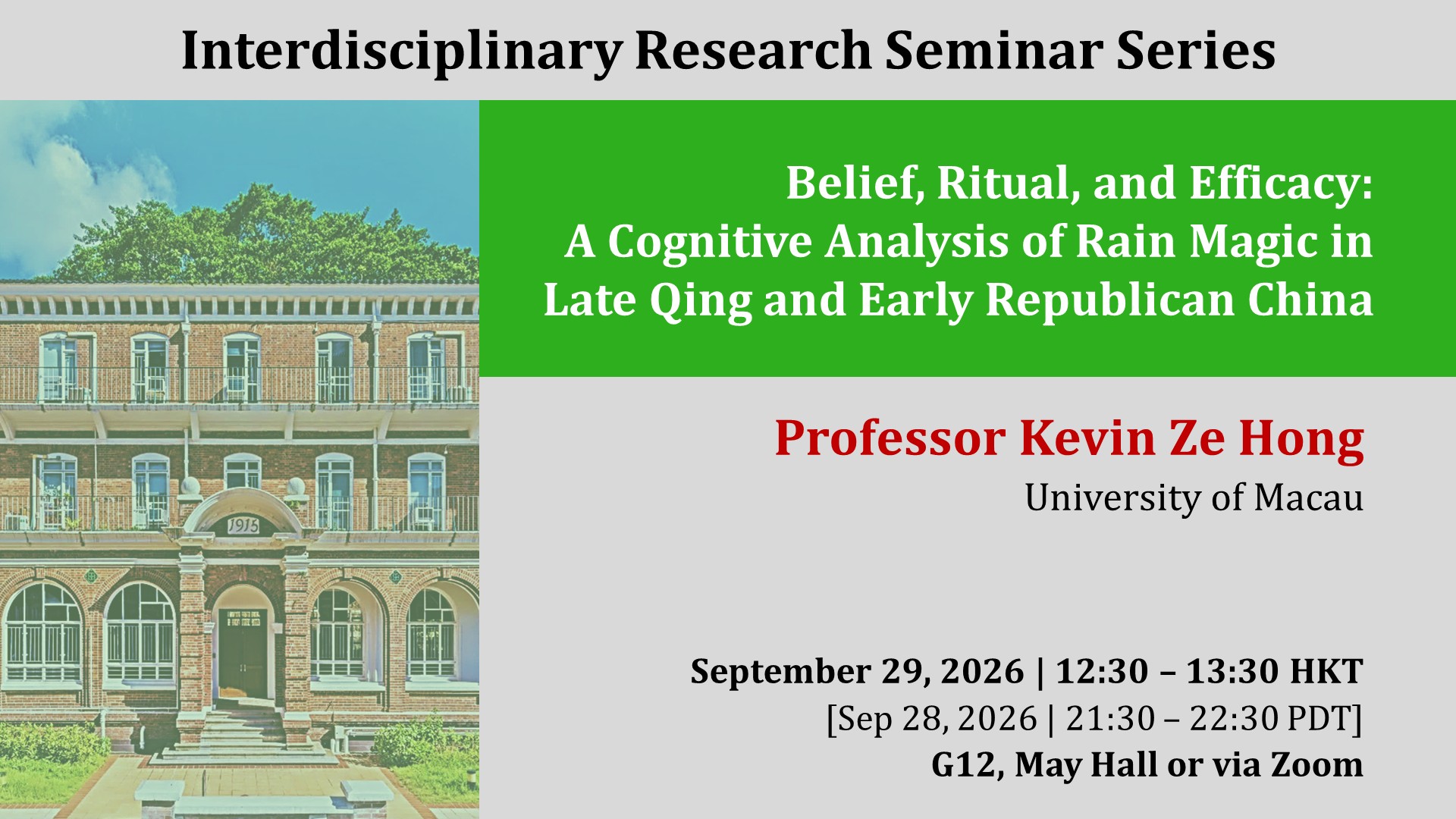
Belief, Ritual, and Efficacy: A Cognitive Analysis of Rain Magic in Late Qing and Early Republican China

G12, May Hall or via Zoom

Table of Contents Abstract We challenge the interpretivist/symbolic view that rain rituals are primarily social performances by analyzing 3,463 rain ritual episodes from late Qing and early Republican journals and periodicals (1870–1949). We find that rainmaking rituals were far more common in drought-stricken areas while rain-stopping rituals appear more frequently during flooding; regression further confirming […]

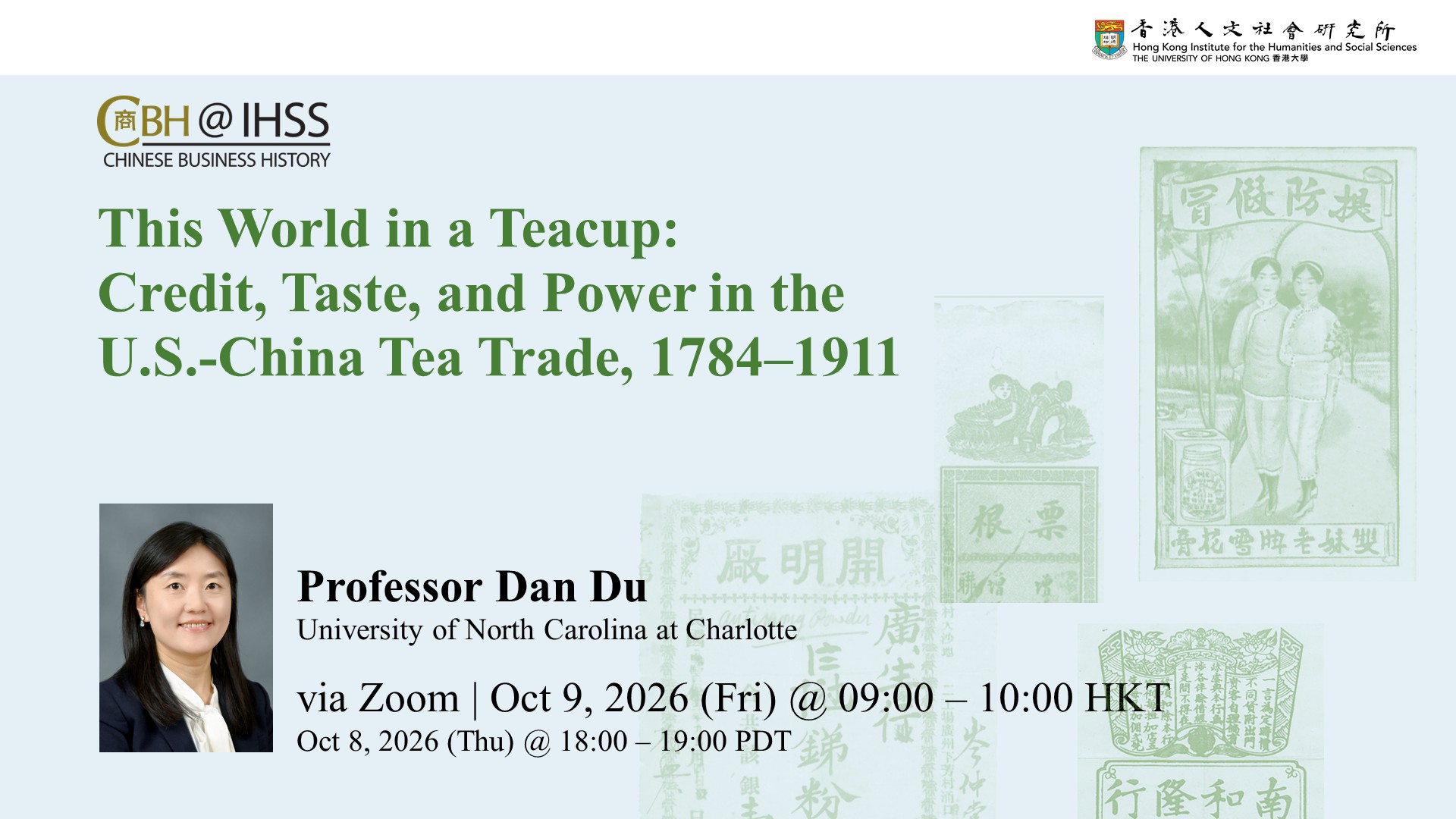
This World in a Teacup: Credit, Taste, and Power in the U.S.-China Tea Trade, 1784–1911

Via Zoom

Table of Contents   Abstract Popular history tells the story of how the tea boycott during the American Revolution caused a transition in American taste from tea to coffee, making the young country a coffee-drinking nation. In truth, Americans did not give up their tea so easily, and the United States grew to be the […]

Distance to Bacon: The Search for the Culture of Growth in Historical China

[Venue Changed] 201, May Hall

Table of Contents *Please note that the event venue has been changed to Room 201, May Hall. You may follow the signs around May Hall to find the venue. Abstract Drawing upon the writings of the Chinese intellectual elite, we assess their intellectual alignment with Baconian philosophy of progress that prevailed in the European Industrial […]

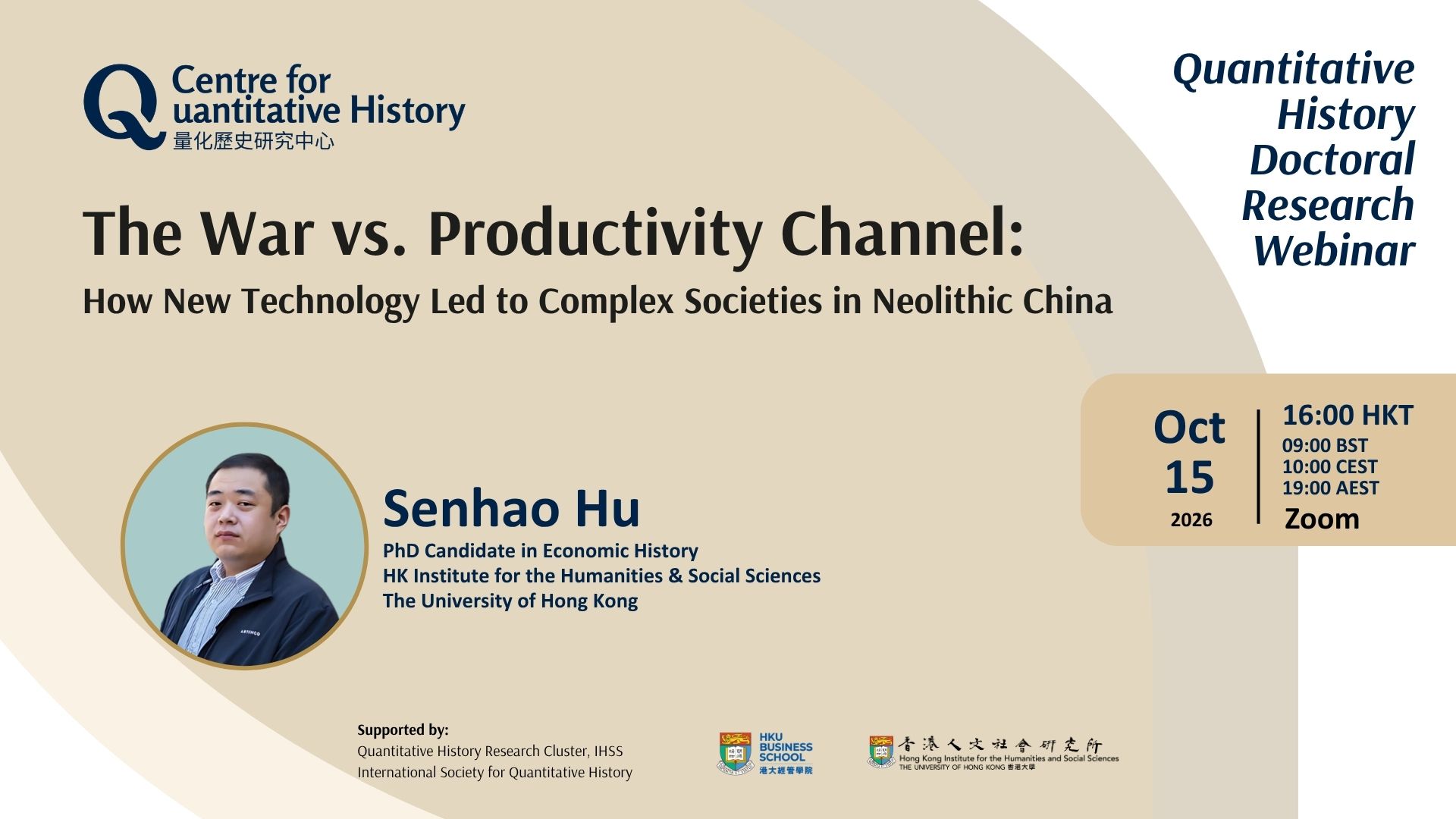
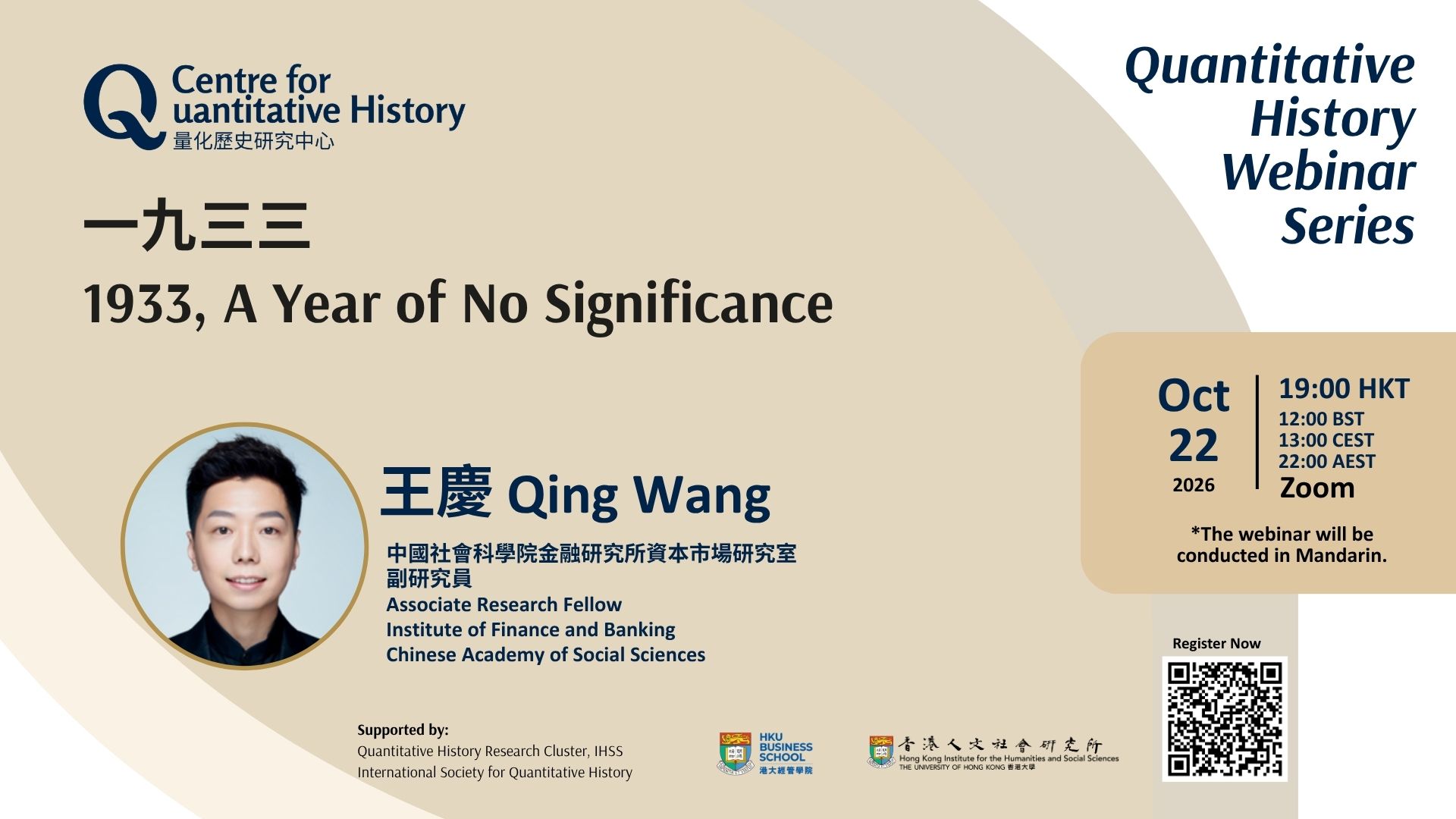
Doctoral Research Webinar: The War vs. Productivity Channel: How New Technology Led to Complex Societies in Neolithic China

Via Zoom

Table of Contents Description In this Quantitative History Webinar, Senhao Hu of Hong Kong Institute for the Humanities and Social Sciences (IHSS) will examine how ground-stone technology contributed to the rise of complex societies during the Neolithic.The standard account—rooted in Gordon Childe’s productivity-channel hypothesis—argues that grinding improved farming implements and increased agricultural productivity, thereby generating […]

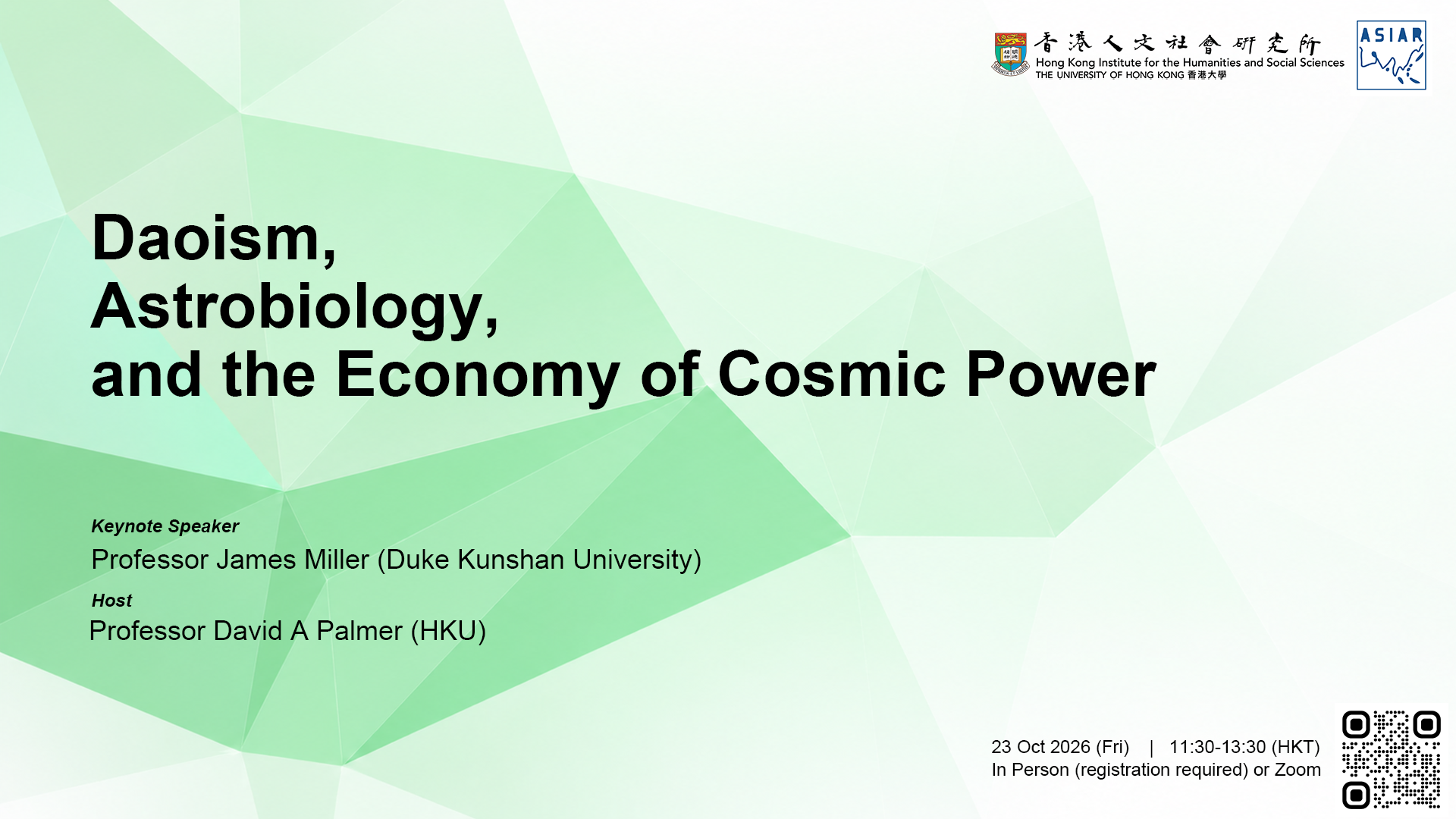
Daoism, Astrobiology, and the Economy of Cosmic Power

G12, May Hall or via Zoom

Table of Contents In-person registration  (limited places) Join via Zoom Zoom ID: 692 288 2342 Passcode: 654321 Abstract In this talk, Professor Miller interprets medieval Daoism as the mediation of porous human bodies and celestial phenomena via scriptural transmission and ritual practice. Stars are understood as palaces where gods reside. Visualization connects these cosmic phenomena […]

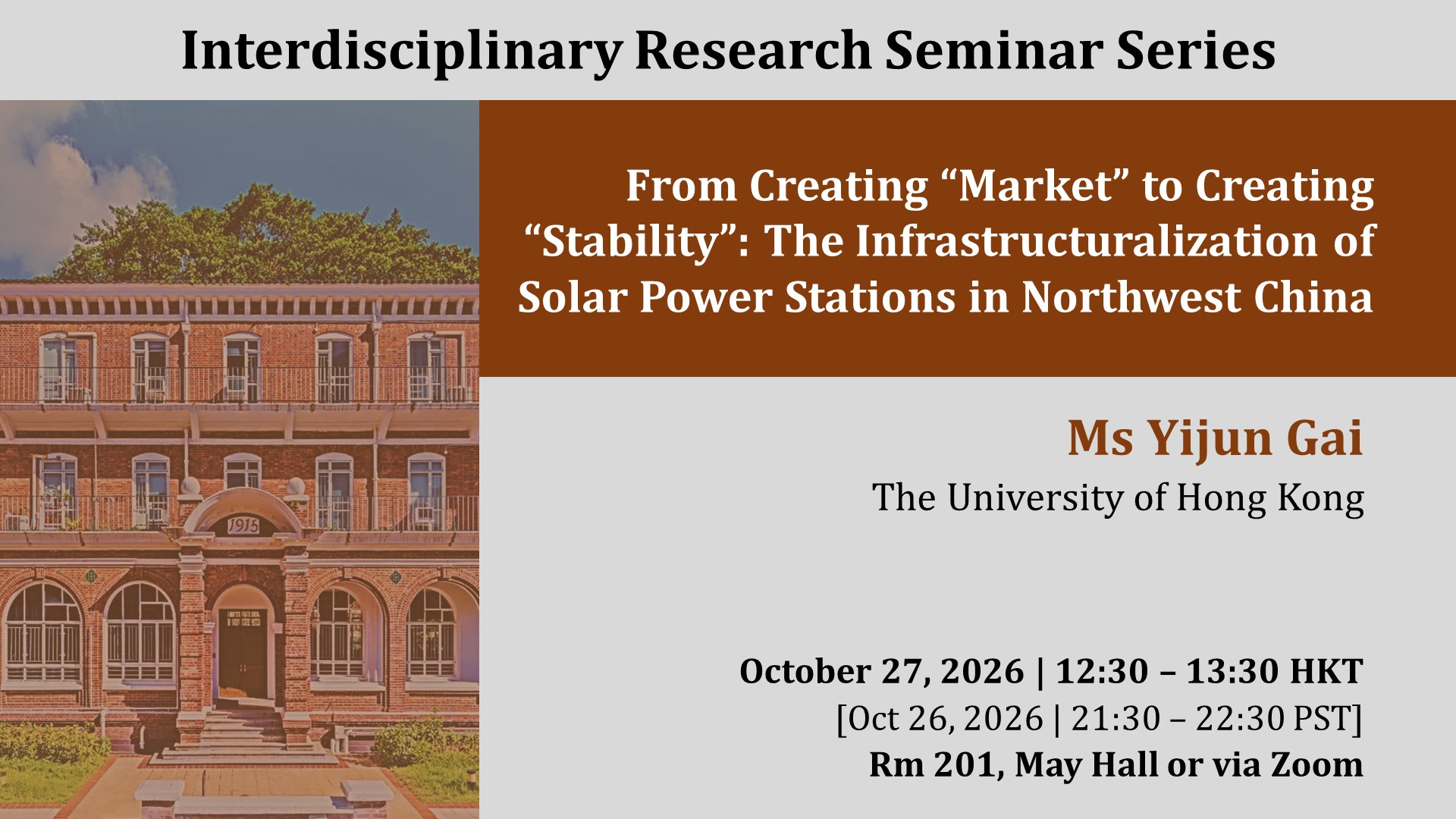
From Creating “Market” to Creating “Stability”: The Infrastructuralization of Solar Power Stations in Northwest China

201, May Hall, The University of Hong Kong, or Via Zoom

Table of Contents Abstract The massive expansion of solar power in China was less a linear green transition than an evolving process of managing a politically conjured energy market. Triggered by the 2008 financial crisis, a rapid deployment soon collided with rigid material and institutional constraints of the national grid. This study analyzes this market […]

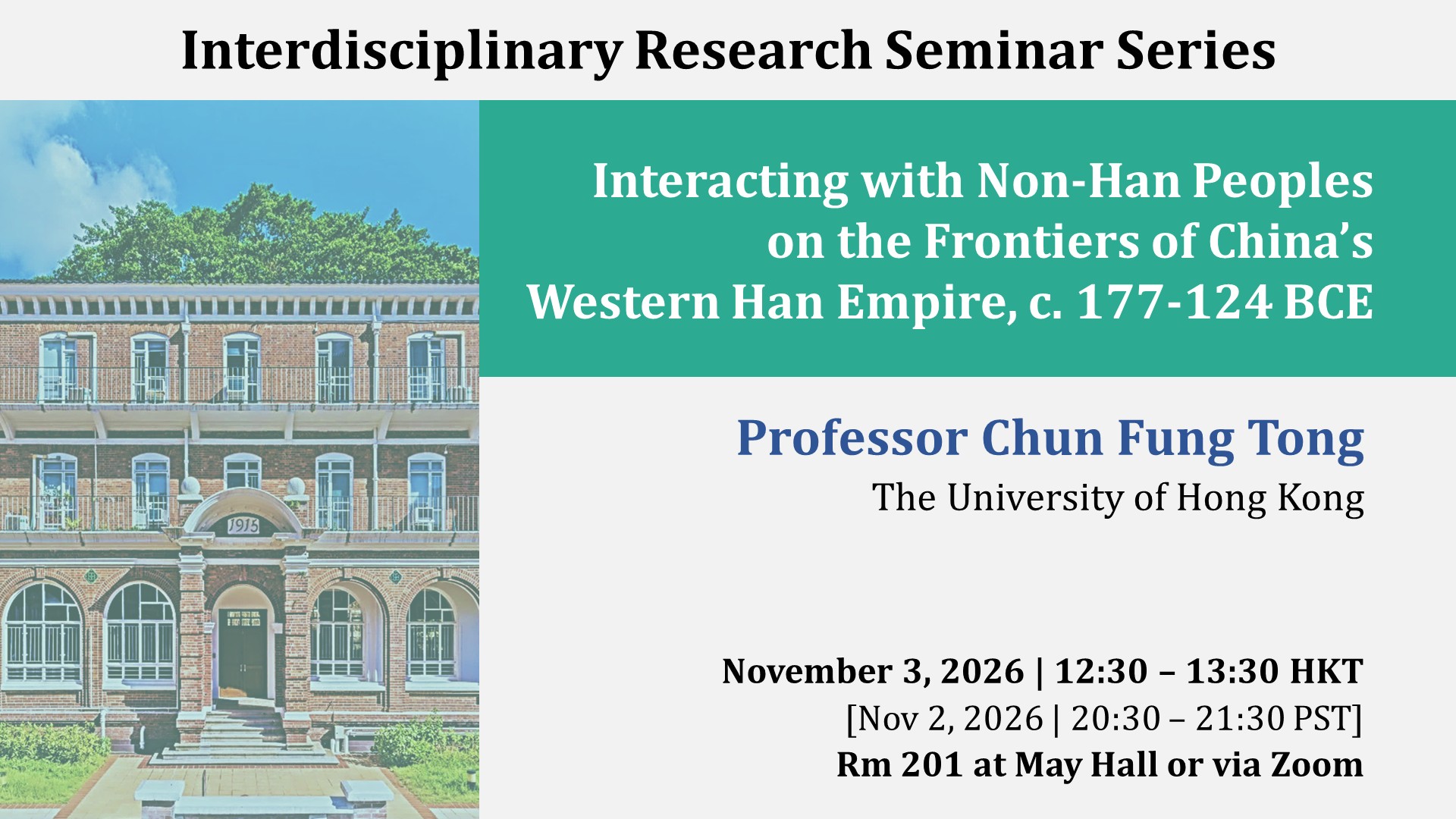
Interacting with Non-Han Peoples on the Frontiers of China’s Western Han Empire, c. 177-124 BCE

201, May Hall, The University of Hong Kong, or Via Zoom

Table of Contents   Abstract This talk examines different modes through which the Han authorities interacted with non-Han groups on and beyond the northern and southern frontier zones of the Western Han Empire. It focuses on two examples. The first concerns diplomatic contact between a Yiqu 義渠 ruler and a high-ranking Han local official in […]

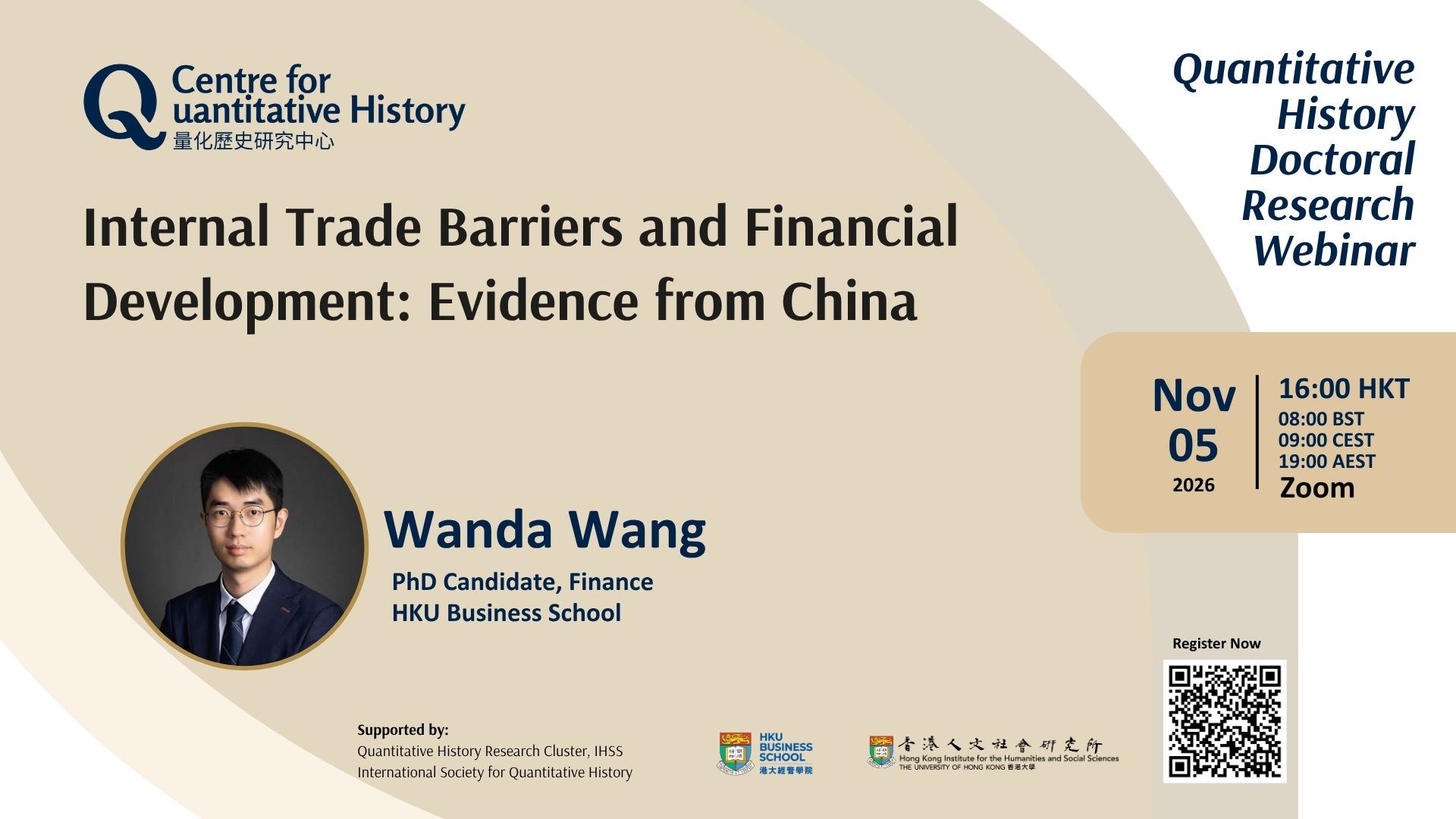
Doctoral Research Webinar: Internal Trade Barriers and Financial Development: Evidence from China

Via Zoom

Table of Contents   Abstract In this Quantitative History Webinar, Wanda Wang of HKU Business School will present research on whether goods-market integration can expand finance. He examines China’s 1931 abolition of likin, an internal checkpoint-tax system, using prereform station counts across 272 prefectures. Chinese bank offices and industrial entry grew most in places where […]

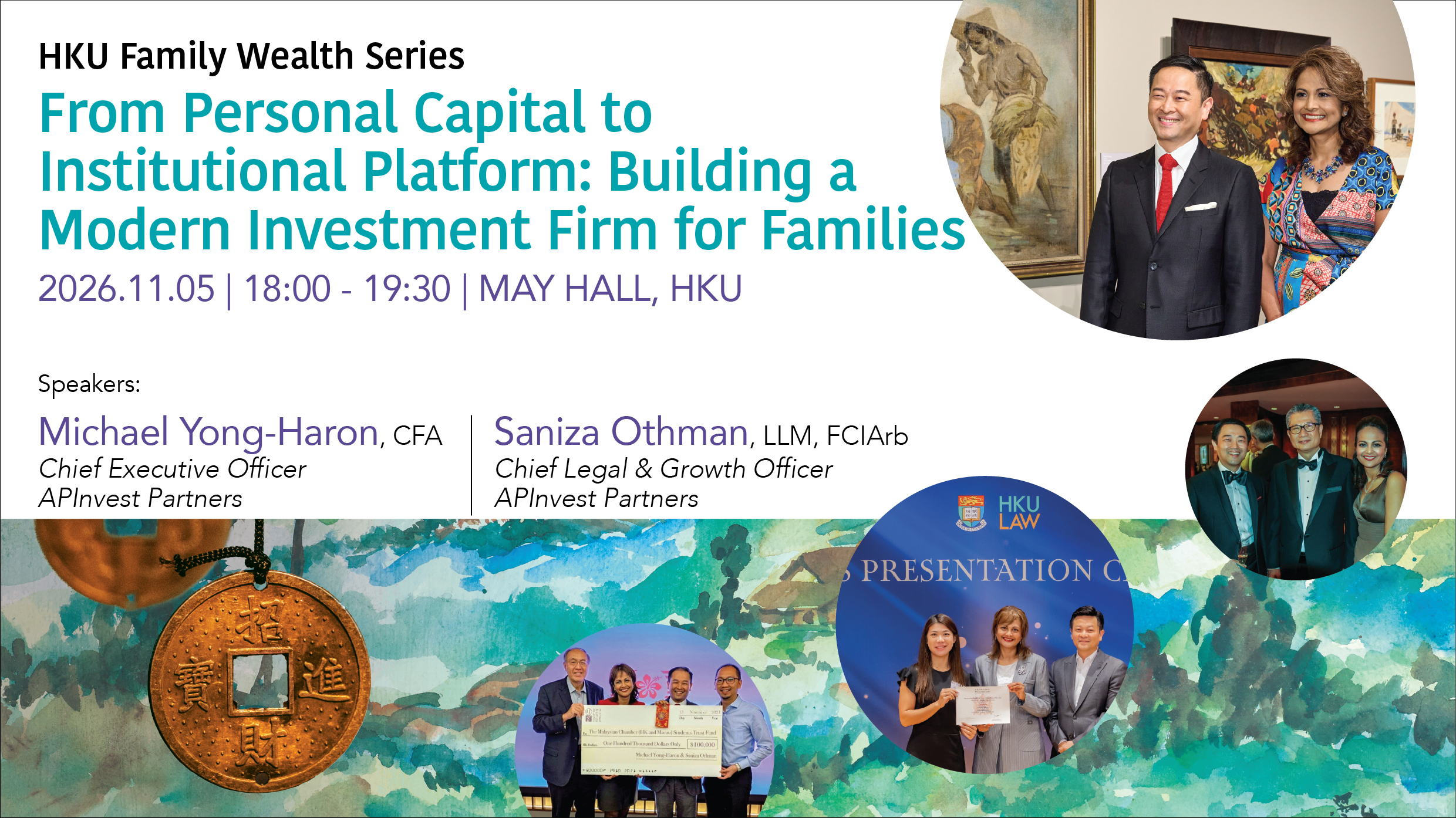
From Personal Capital to Institutional Platform: Building a Modern Investment Firm for Families

G01, May Hall, The University of Hong Kong

Table of Contents   Abstract In family wealth management, much attention is paid to investment strategies, succession planning and governance. Yet one of the most important challenges facing entrepreneurial families today is how to build investment organizations that combine the alignment of a family with the discipline and governance of an institutional investment platform. For […]

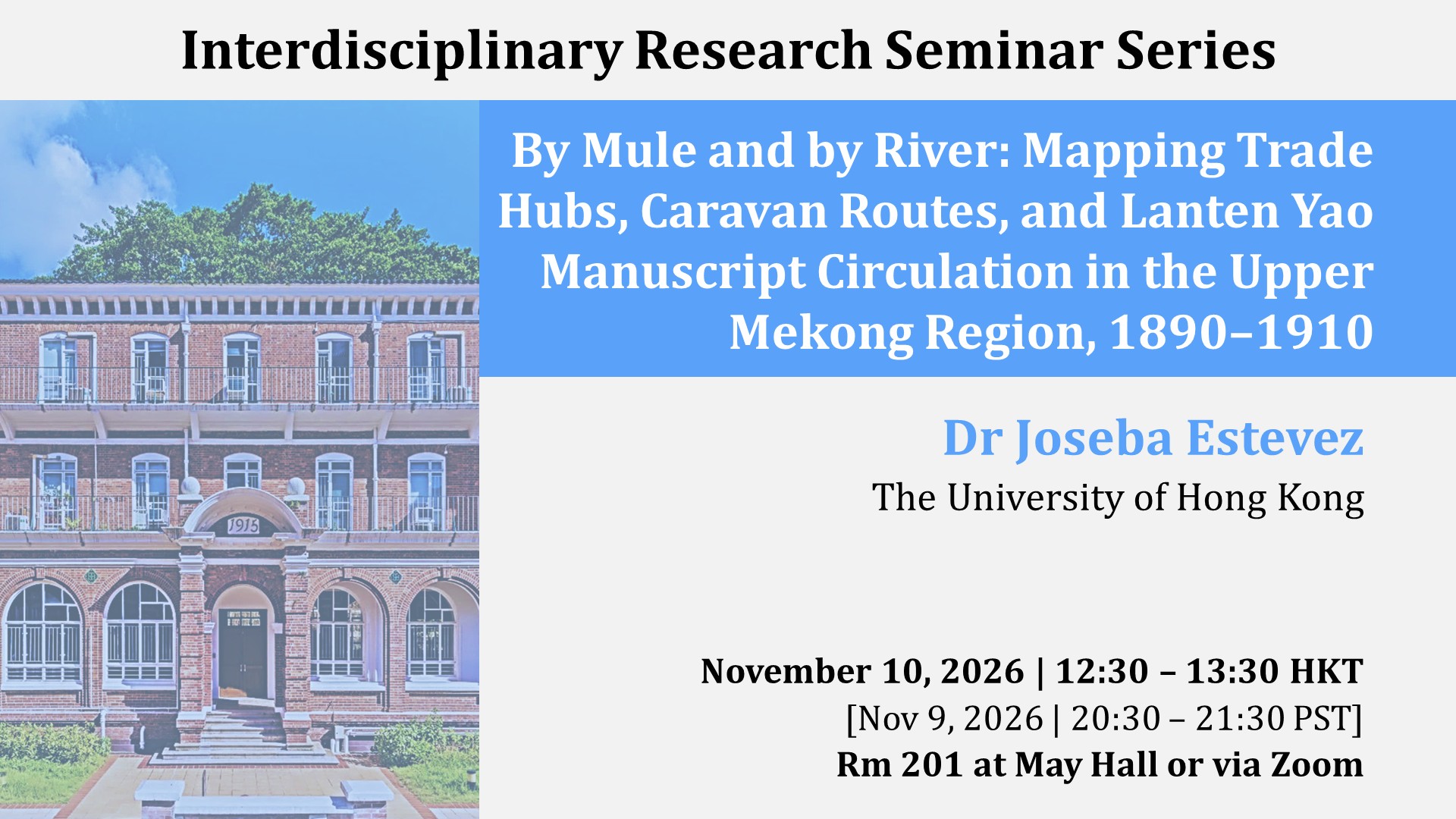
By Mule and by River: Mapping Trade Hubs, Caravan Routes, and Lanten Yao Manuscript Circulation in the Upper Mekong Region, 1890–1910

201, May Hall, The University of Hong Kong, or Via Zoom

Table of Contents Abstract The highlands of the Southeast Asian Massif and adjacent Southwest China constitute one of the most persistent geographies of ignorance in the human sciences — quartered between competing area studies disciplines, divided by postcolonial sovereign borders, and silenced by archives that encode colonial and dynastic optics while systematically excluding highland perspectives. […]

God or Government? An Explanation from (In)Compensable Climate Risks

201, May Hall, The University of Hong Kong, or Via Zoom

Table of Contents   Abstract God and government are fundamental sources of order in human societies, yet people differ across societies in where they place their faith between the two. We argue that these enduring differences can be partly traced to the types of climate risk faced by ancestral communities. When people confronted incompensable risk […]