
The Quantitative History (QH) Research Cluster is the Institute’s interdisciplinary platform for the study of China’s past, developed in close collaboration with the Centre for Quantitative History (CQH) at HKU Business School. While working alongside CQH in advancing data-driven historical research, the Cluster is distinguished by its role within the Institute as a hub that brings together quantitative history, economic history, early history, and quantitative archaeology.
Quantitative History
team
- Zhiwu Chen (Director and Chair Professor, IHSS & HKU Business School)
- Ying Bai (Professor, HKU Business School)
- Chicheng Ma (Associate Professor, HKU Business School)
- Yuqi Chen (Assistant Professor, IHSS & Faculty of Arts)
- Sijie Hu (Assistant Professor, IHSS & Faculty of Social Sciences)
- Zhan Lin (Visiting Associate Professor, IHSS)
- Meiqi Ding (PhD student)
- Senhao Hu (PhD student)
- Sheng Zhou (PhD student)
About the Quantitative History (QH) Research Cluster

Building on the Institute Director’s Area of Excellence project, “Quantitative History of China,” the QH Research Cluster promotes innovative research on the long-term development of Chinese civilisation through the use of quantitative methods, newly available archives and sources, and digital tools including AI- and machine learning-assisted processing modules. It supports collaborative work across disciplines and encourages dialogue between quantitative and qualitative historians, archaeologists, and scholars of early China.
The QH Research Cluster’s research covers a wide range of themes, including long-term development, religion and trade, war and the rise of Chinese civilisation, maritime trade and the rise of the South, health and inequality, population history, and social history. In addition to research, it contributes to the Institute’s intellectual community through historical database construction, hybrid lecture and webinar series, visiting scholars, student training, and the development of new areas of teaching and research.
As the QH Research Cluster continues to grow, it is helping to build critical mass at HKU in Chinese economic history, Chinese demographic history, Pre-Qin Chinese history, early Chinese history, and quantitative archaeology. In doing so, it strengthens the Institute’s position as a distinctive centre for interdisciplinary research on China’s past and contributes to HKU’s broader profile in global historical and Asian studies.
INstitutional role within the institute
The Quantitative History Research Cluster serves as a key research platform within the Institute, supporting scholarship at the intersection of history, data, and quantitative methods. It brings together affiliated scholars, promotes interdisciplinary collaboration, and contributes to the Institute’s academic activities through seminars, workshops, and joint research initiatives.
Key Milestones
July 2022
Launching the Cluster and partnership
- Established the QH Research Cluster and strategic partnership with HKU Arts, HKU Business School and HKU Social Sciences.
2023 - 2024
Building research capacity
- Strengthened collaboration between quantitative historians and archaeologists.
- Advanced research on Chinese civilisation through innovative methods, new archives and teaching initiatives.
2024 - 2025
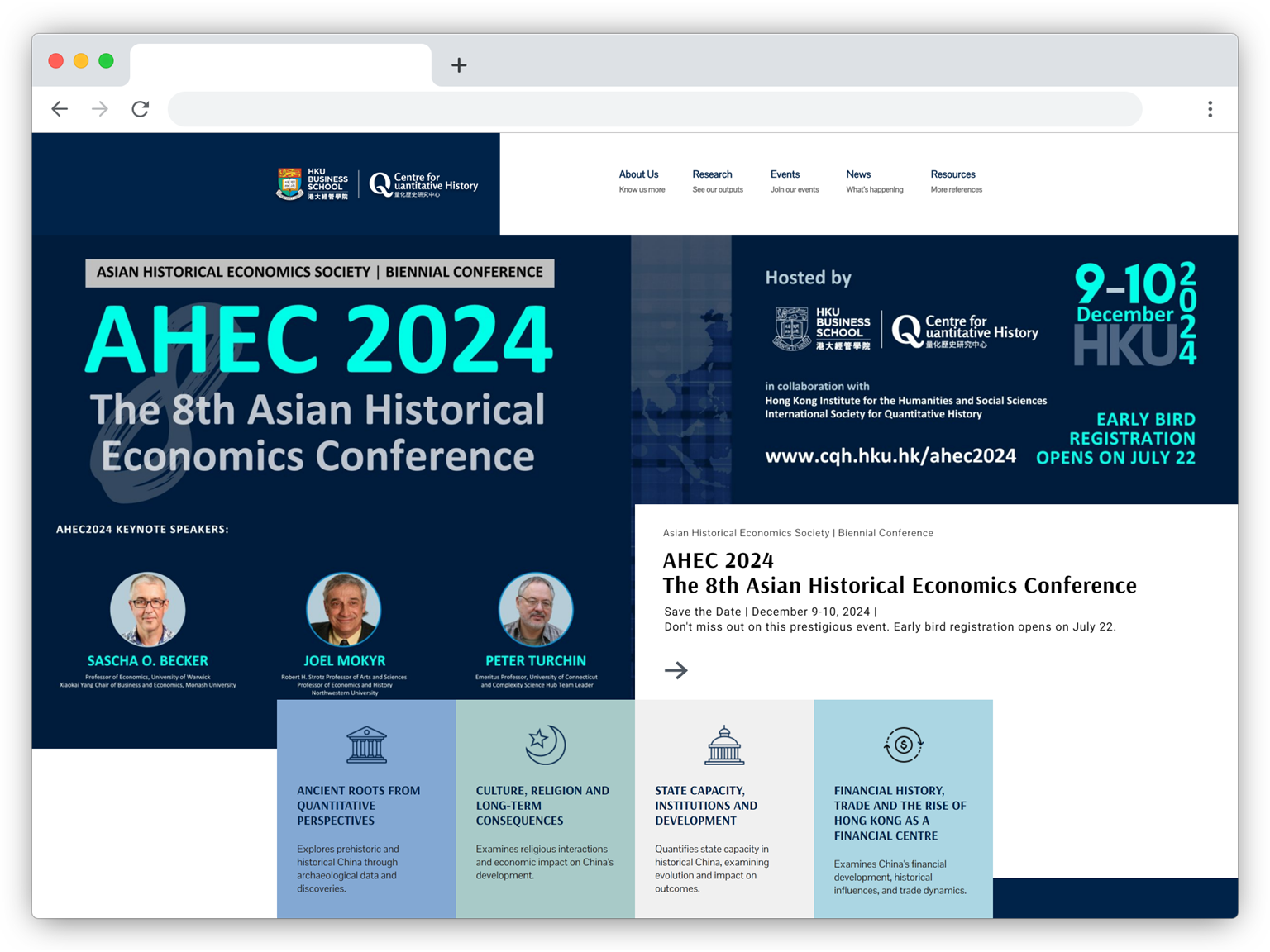
- Hosted major international events including the 10th Quantitative History Summer School cum International Symposium and the 8th Asian Historical Economics Conference.
2025 - 2026
Next-stage expansion: toward a broader interdisciplinary hub
- Advanced Al-assisted research and database construction.
- Strengthened the field through new appointments in economic, demographic and early Chinese history.
Research Outputs and Activities
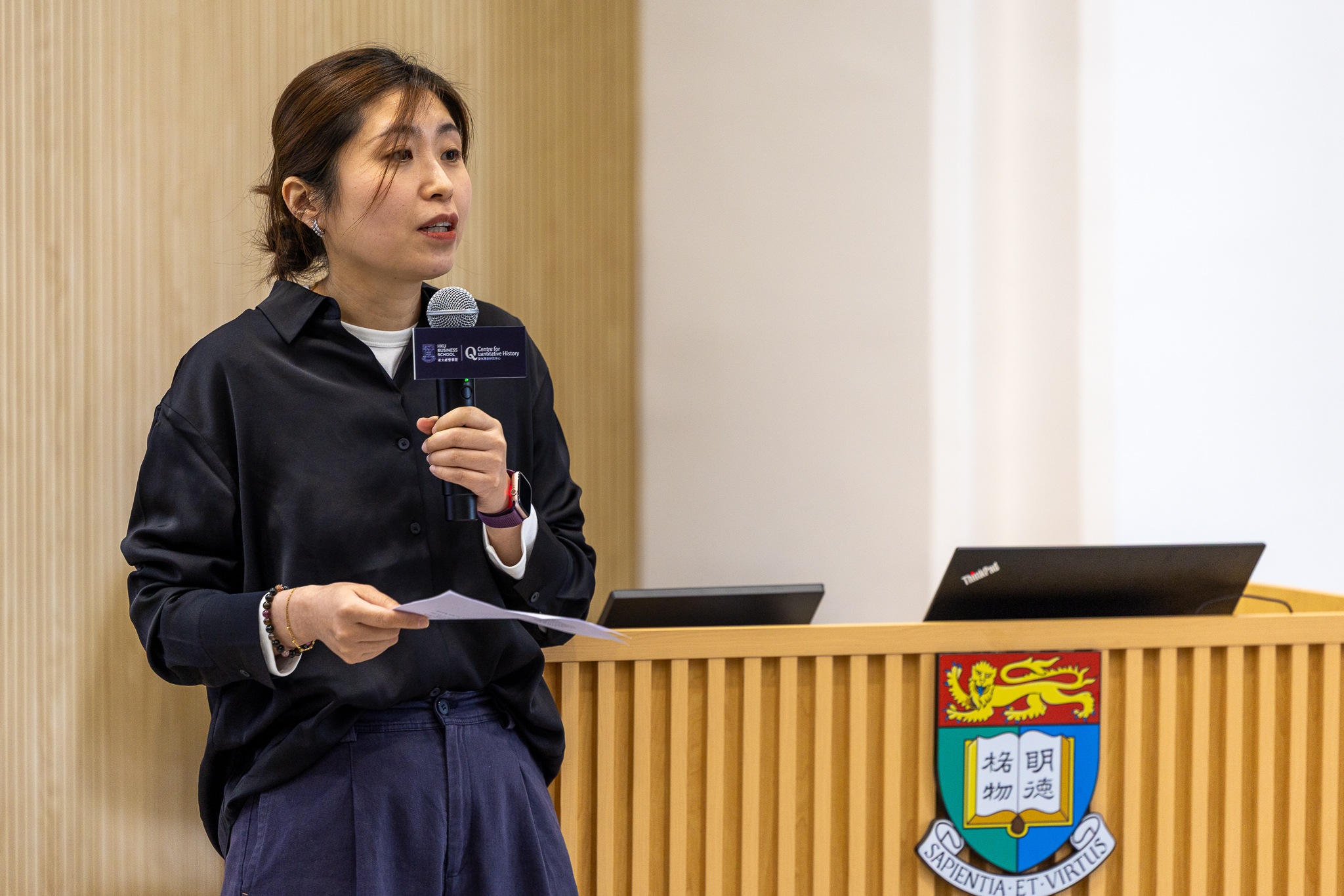
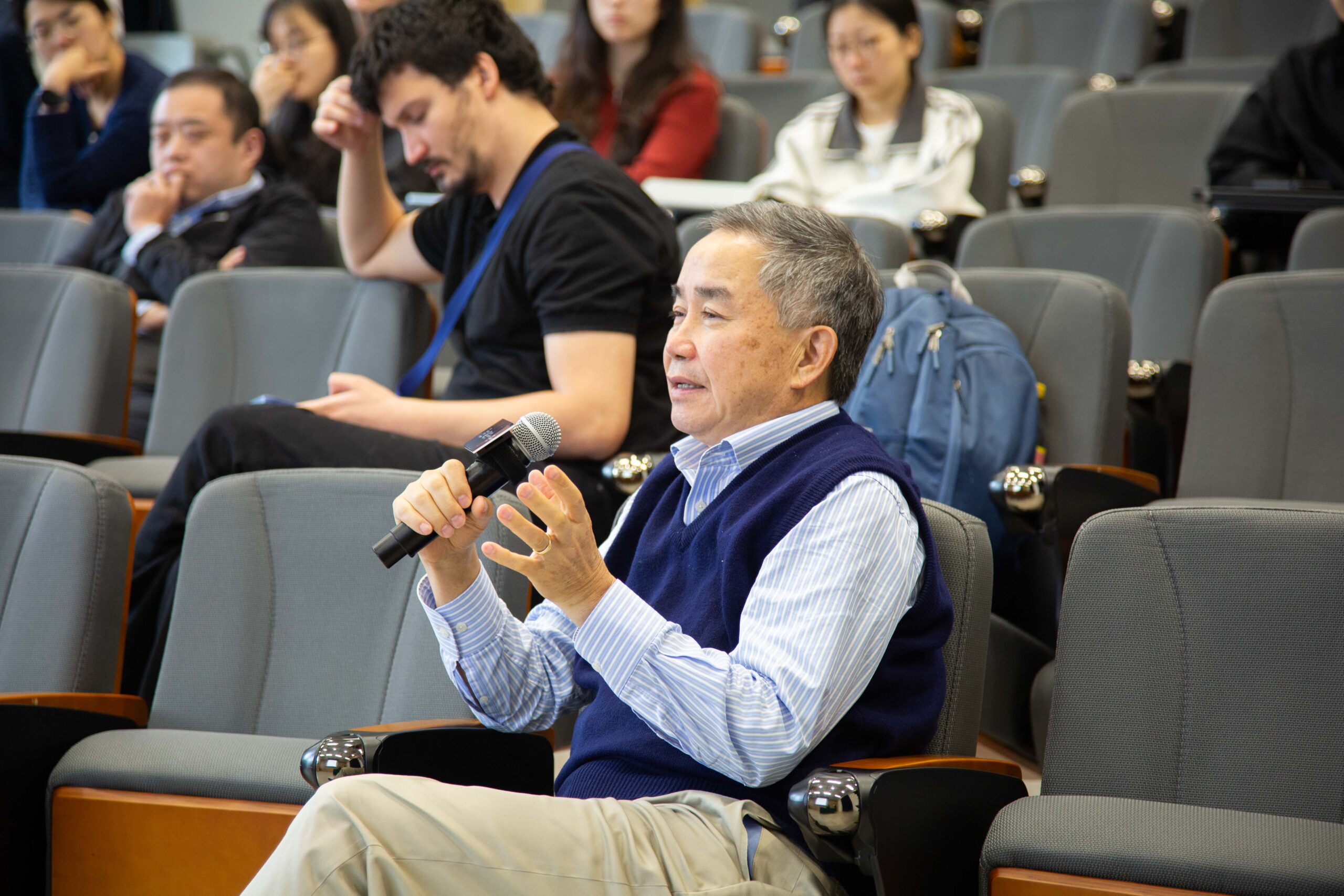
The Cluster has contributed to a growing body of research through publications, webinars, seminars, workshops, summer schools, symposia, conferences, and collaborative projects. Its activities reflect an ongoing commitment to producing high-quality scholarship and promoting the use of quantitative methods in historical research.
- Publications
The QH Cluster is committed to academic excellence and diverse research output. Our members publish journal articles, book chapters, working papers, edited volumes, books and digital scholarship that advance quantitative history and foster interdisciplinary dialogue.
Latest/Selected works
Chen, Zhiwu and Wang, Wanda (revise and resubmit) “Reversal of Neolithic Fortunes: Trade Opening and the Durable Reordering of China’s Economic Geography,” The Journal of Economic History.
Chen, Zhiwu (2022) Logic of Civilization: How Humans have Innovated to Deal with Risk《文明的邏輯:人類與風險的博弈》. Beijing: CITIC Press.
Chen, Zhiwu (ed.) (2021) Quantitative History Research, Vol 6《量化历史研究 (第六辑) 》Co-edited by Debin Ma and Denggao Long. China: Science Publishers.
Chen, Zhiwu (ed.) (2019) Quantitative History Research, Vol 5《量化历史研究 (第五辑) 》. Co-edited by Debin Ma and Denggao Long. China: Science Publishers.
Chen, Zhiwu, Peng Kaixing and Lin, Zhan (2025) Rise of the south: How Arab-led maritime trade transformed China, 671–1371 CE. Asia-Pacific Economic History Review, 65(1): 3–38.
Chen, Zhiwu (2024) Quantitative History Research, Vol 7《量化历史研究 (第七辑) 》 Shanghai: Jiao Tong University Press. Co-edited with co-edited with Debin Ma and Denggao Long.
Chen, Zhiwu, Lin, Zhan and Zhang, Xiaoming (2024) Hedging desperation: How kinship networks reduced cannibalism in historical China. Journal of Comparative Economics, 52(2), 362–82.
Chen, Zhiwu, and Ma, Chicheng (2023) Quantitative history studies on China: State capacity, institutions, culture and human capital from prehistoric times to the present. Asia-Pacific Economic History Review Special Issue: Quantitative Studies on Chinese Economic History (co-edited by Zhiwu Chen and Chicheng Ma), 63(2): 128-44.
Chen, Zhiwu and Peng, Kaixing (2022) Production, consumption, and living standards. In The Cambridge Economic History of China, Volume 1: To 1800. Cambridge: Cambridge University Press, pp. 676-709. Edited by Debin Ma and Richard von Glahn.
Chen, Zhiwu, Ma Chicheng and Sinclair, Andrew (2022) Banking on the Confucian Clan: Why China developed financial markets so late. The Economic Journal, 132(644), 1378-413.
Chen, Y., Shang, W., Wang, H., Zhang, S., and Bol, P. K. (2025) Geocoding the past world: Unearthing coordinates of early China from texts using generative AI. International Journal of Geographical Information Science, 40(2): 1-27.
Chen, Y., Atari, M., Slingerland, E., Hong, Z., Fu, X., Wang, H., Schulz, J., Bol, P.K., and Henrich, J. (2025) Psychological change and kinship intensity in China over two millennia. PsyArXiv.
Chen, Y., Li, Y., Zhou, K. Z., Fu, X., Liu, L., Bao, S., Sui, D., & Zhang, L. (2024) Global public sentiment on decentralized finance: A spatiotemporal analysis of Geo-tagged Tweets from 150 Countries.
Chen, Y., Li, S., Li, Y., & Atari, M. (2024) Surveying the dead minds: Historical-psychological text analysis with contextualized construct representation (CCR) for classical Chinese. In Proceedings of the 2024 Conference on Empirical Methods in Natural Language Processing. Edited by Y. Al-Onaizan, M. Bansal, & Y.-N. Chen, pp. 2597–615. Texas: Association for Computational Linguistics.
Hu, Sijie (2025) Evolutionary advantage of moderate fertility during Ming–Qing China: A unified growth perspective. Journal of Economic Growth, 30(4):497-519. https://doi.org/10.1007/s10887-025-09255-5.
Hu, Sijie (2023) Survival of the Literati: Social status and reproduction in Ming–Qing China. Journal of Population Economics, 36(4): 2025-70.
Cai, Yang, Hu, Sijie, and Sun, Shengmin (2023) Confucianism and War Mobilization: Evidence from Chinese Revolutions. Cliometrica, 18(2): 1-37.
Hu, Sijie (2023) Descendants over 300 years: Marital fertility in five lineages in Qing China. Asia-Pacific Economic History Review, 63(2): 200-24.
Hu, Sijie, and Liu, Ziang (2025) “与人口赛跑: 重视前现代中国与英国人口与生产力的长期趋势” (Racing with population: Revisiting the long-run population and productivity in early modern China and England). Qing History Journal (清史研究), 1: 35–46.
Hu, Sijie, and Wang, Jue (2024) “明清时期的性别歧视: 以江浙地区六个家族为例” (Gender discrimination during the Ming and Qing dynasties: A case study of six lineages in Jiangsu and Zhejiang Provinces). Economic Theory and Business Management (经济理论与经济管理), 6: 125-40.
- Quantitative History Lunchtime Workshops

Our closed-door lunchtime workshops provide a supportive forum for PhD students and researchers to present work in progress, including preliminary findings. Designed to encourage collaboration and constructive peer feedback, these sessions help advance research across disciplines.
- Quantitative History Webinar Series
The Quantitative History (QH) Webinar Series provides researchers, teachers, and students with an online intellectual platform to stay up to date with the latest research in the field. It promotes the dissemination of research findings and the interdisciplinary use of quantitative methods in historical research. Now entering its seventh year, the QH Webinar Series is co-organized by the Centre for Quantitative History at HKU Business School and the International Society for Quantitative History, in partnership with the Hong Kong Institute for the Humanities and Social Sciences. The series is generously supported by the Areas of Excellence (AoE) Scheme of the Research Grants Council of the Hong Kong Special Administrative Region, China (Project No. AoE/B-704/22-R). Prof. Sijie Hu of the Institute currently serves as Series Coordinator.
Explore the QH Webinar Series
- Quantitative History Lecture Series
The Cluster also hosts a hybrid lecture series featuring scholars visiting Hong Kong. These events provide valuable opportunities for in-depth intellectual exchange, fostering dialogue across disciplines and enriching teaching, learning, and research. The lectures are also livestreamed on Zoom as part of the Quantitative History Webinar Series, extending their reach to a wider academic audience. They also strengthen connections between local and international scholars, students, and the broader academic community.
JOB OPPORTUNITIES

Research Assistant I/II (several posts) in the Centre for Quantitative History (CQH)
- Ref.: 534625
- Closing date: Jun 30, 2026 (HK Time)
Post-doctoral Fellow (several posts) in the Centre for Quantitative History (CQH)
- Ref.: 534633
- Closing date: Aug 31, 2026 (HK Time)
LATEST EVENT
HKU Financial History Workshop 2025
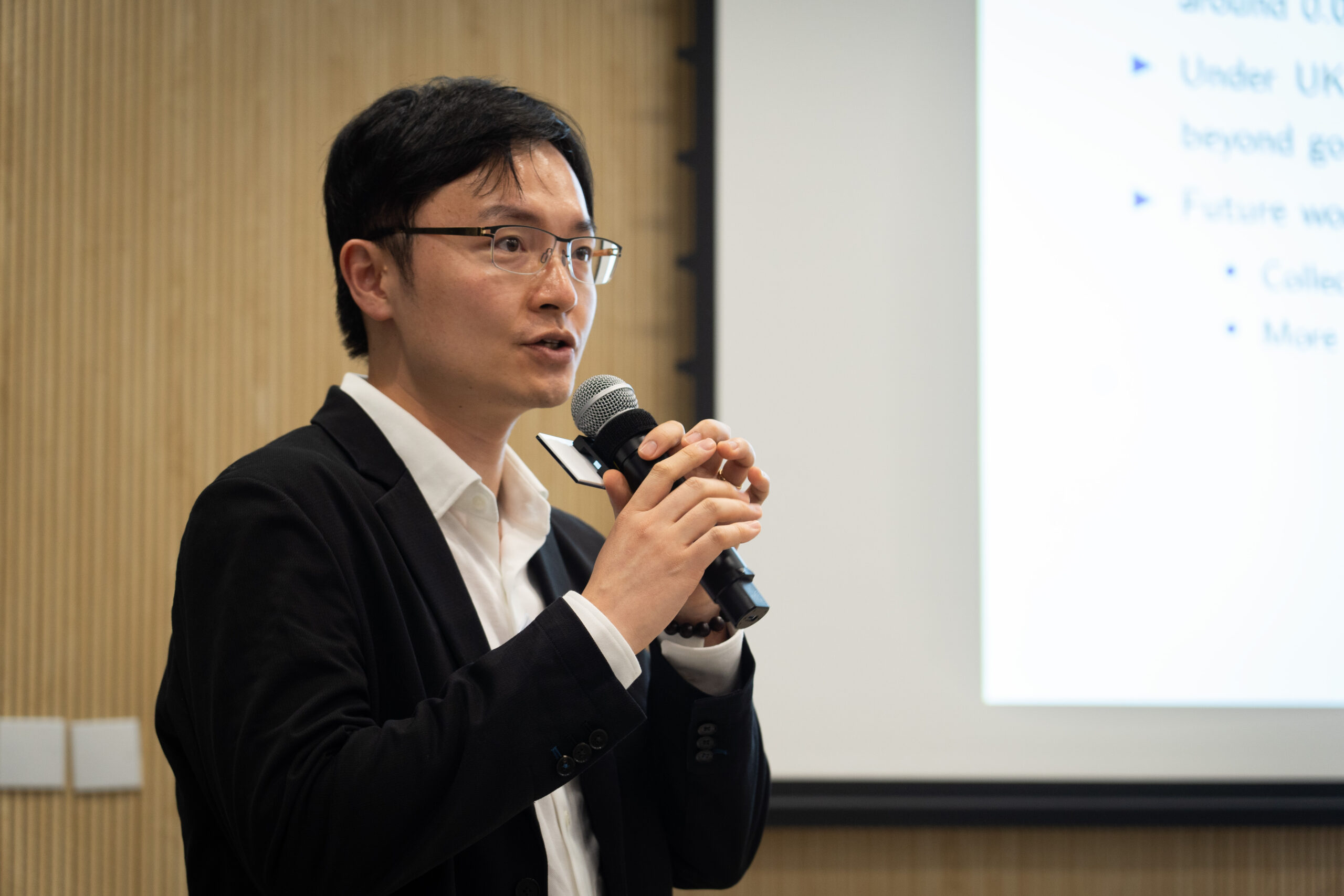
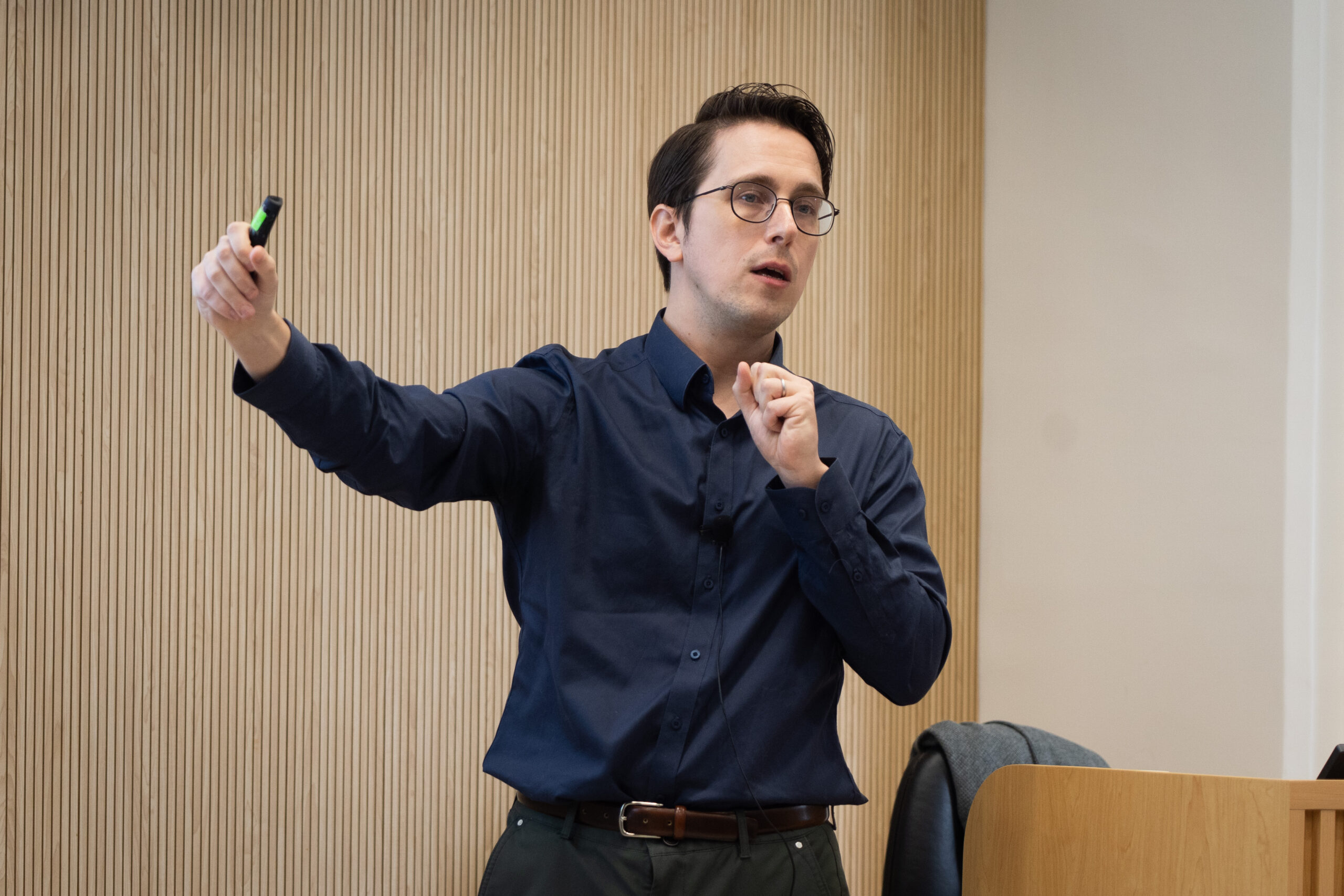
The HKU Financial History Workshop organized by the Centre for Quantitative History at HKU took place on December 2 – 3, 2025, at May Hall. It was the first event in a series aimed at fostering international scholarly exchange in financial history, bringing together over 60 experts and participants from Asia, Europe, and North America.