Filters

Changing any of the form inputs will cause the list of events to refresh with the filtered results.

God or Government? An Explanation from (In)Compensable Climate Risks

201, May Hall, The University of Hong Kong, or Via Zoom

Table of Contents   Abstract God and government are fundamental sources of order in human societies, yet people differ across societies in where they place their faith between the two. We argue that these enduring differences can be partly traced to the types of climate risk faced by ancestral communities. When people confronted incompensable risk […]
By Mule and by River: Mapping Trade Hubs, Caravan Routes, and Lanten Yao Manuscript Circulation in the Upper Mekong Region, 1890–1910

201, May Hall, The University of Hong Kong, or Via Zoom

Table of Contents Abstract The highlands of the Southeast Asian Massif and adjacent Southwest China constitute one of the most persistent geographies of ignorance in the human sciences — quartered between competing area studies disciplines, divided by postcolonial sovereign borders, and silenced by archives that encode colonial and dynastic optics while systematically excluding highland perspectives. […]

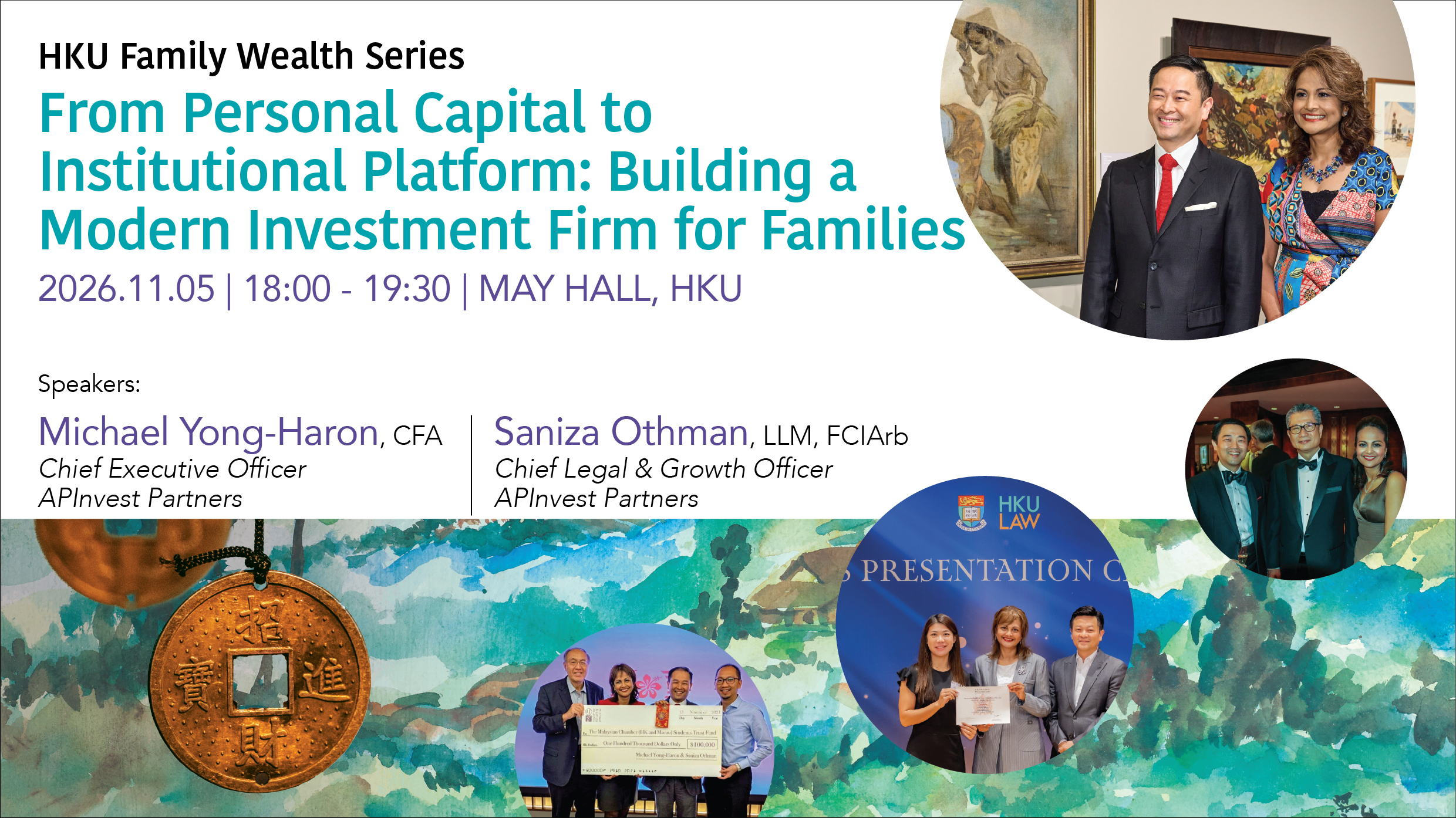
From Personal Capital to Institutional Platform: Building a Modern Investment Firm for Families

G01, May Hall, The University of Hong Kong

Table of Contents   Abstract In family wealth management, much attention is paid to investment strategies, succession planning and governance. Yet one of the most important challenges facing entrepreneurial families today is how to build investment organizations that combine the alignment of a family with the discipline and governance of an institutional investment platform. For […]

Interacting with Non-Han Peoples on the Frontiers of China’s Western Han Empire, c. 177-124 BCE

201, May Hall, The University of Hong Kong, or Via Zoom

Table of Contents   Abstract This talk examines different modes through which the Han authorities interacted with non-Han groups on and beyond the northern and southern frontier zones of the Western Han Empire. It focuses on two examples. The first concerns diplomatic contact between a Yiqu 義渠 ruler and a high-ranking Han local official in […]

From Creating “Market” to Creating “Stability”: The Infrastructuralization of Solar Power Stations in Northwest China

201, May Hall, The University of Hong Kong, or Via Zoom

Table of Contents Abstract The massive expansion of solar power in China was less a linear green transition than an evolving process of managing a politically conjured energy market. Triggered by the 2008 financial crisis, a rapid deployment soon collided with rigid material and institutional constraints of the national grid. This study analyzes this market […]

Distance to Bacon: The Search for the Culture of Growth in Historical China

[Venue Changed] 201, May Hall

Table of Contents *Please note that the event venue has been changed to Room 201, May Hall. You may follow the signs around May Hall to find the venue. Abstract Drawing upon the writings of the Chinese intellectual elite, we assess their intellectual alignment with Baconian philosophy of progress that prevailed in the European Industrial […]

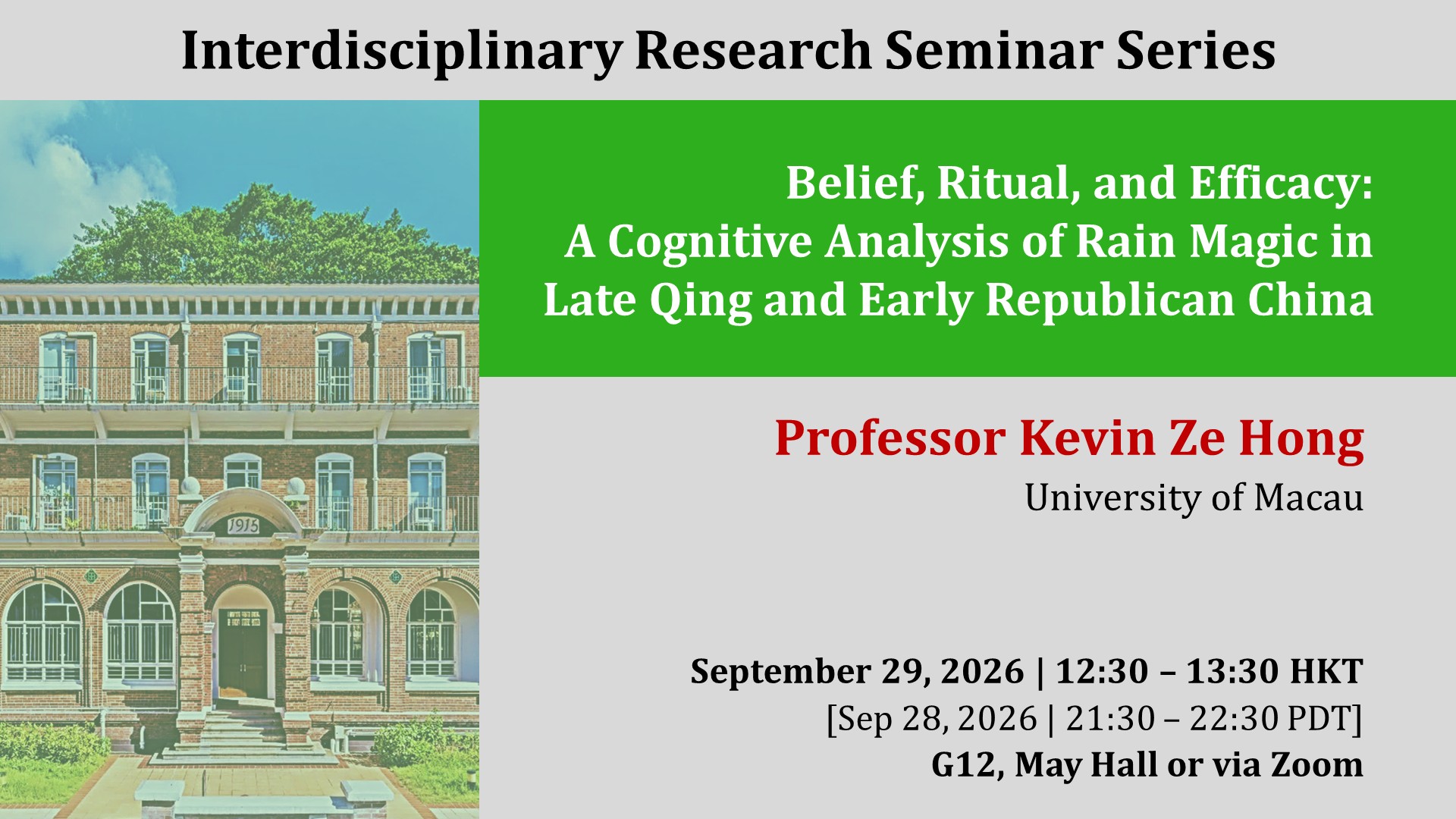
Belief, Ritual, and Efficacy: A Cognitive Analysis of Rain Magic in Late Qing and Early Republican China

G12, May Hall or via Zoom

Table of Contents Abstract We challenge the interpretivist/symbolic view that rain rituals are primarily social performances by analyzing 3,463 rain ritual episodes from late Qing and early Republican journals and periodicals (1870–1949). We find that rainmaking rituals were far more common in drought-stricken areas while rain-stopping rituals appear more frequently during flooding; regression further confirming […]

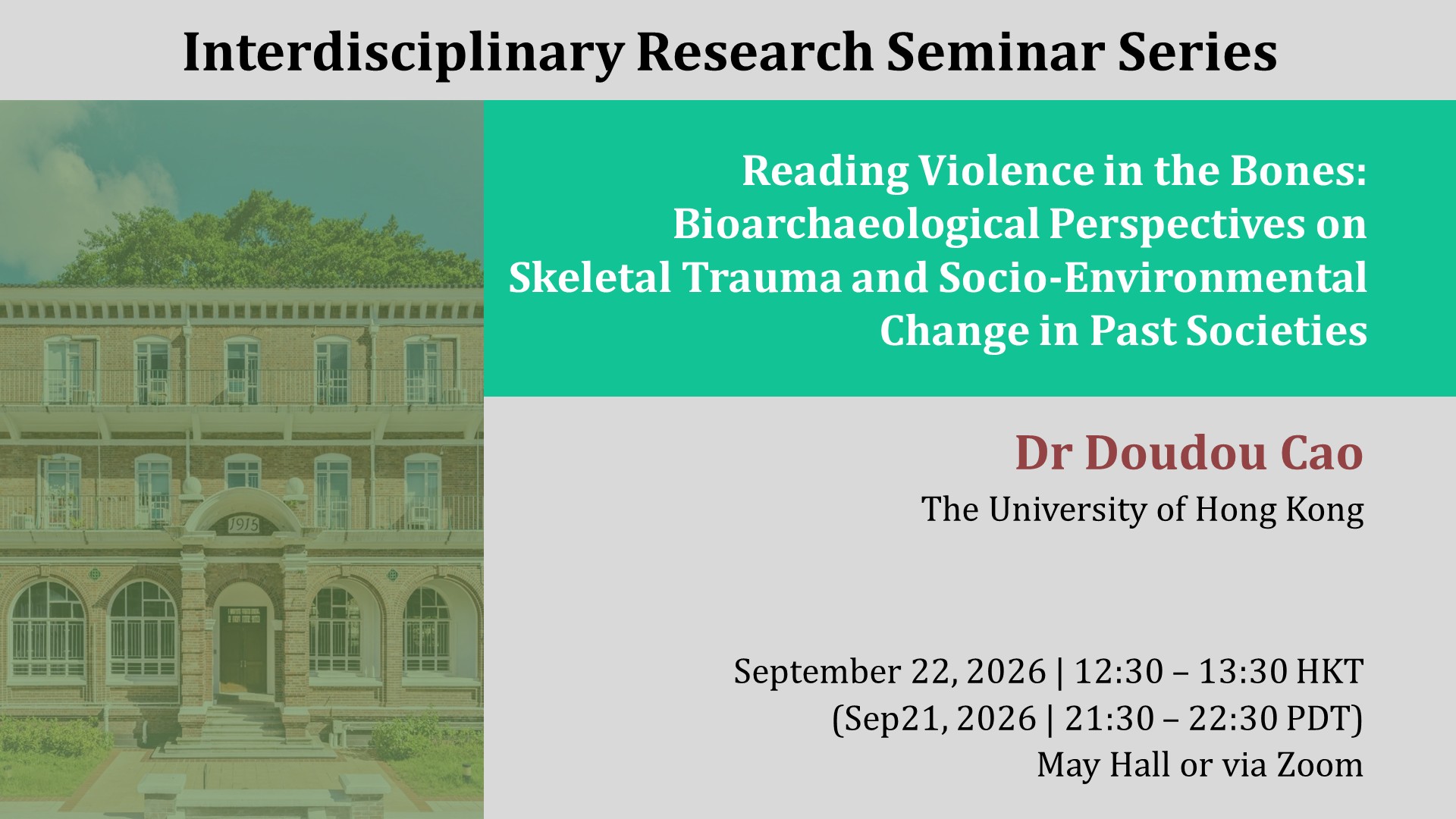
Reading Violence in the Bones: Bioarchaeological Perspectives on Skeletal Trauma and Socio-Environmental Change in Past Societies

G12, May Hall or via Zoom

Table of Contents   Abstract While violence in past societies has traditionally been inferred from weapons, fortifications, and texts, skeletal remains offer direct, long-term evidence of interpersonal conflict. This talk reviews how recent bioarchaeological studies have used skeletal trauma, especially cranial and weapon-related injuries, to examine interpersonal violence and peace over long time scales. Rather […]

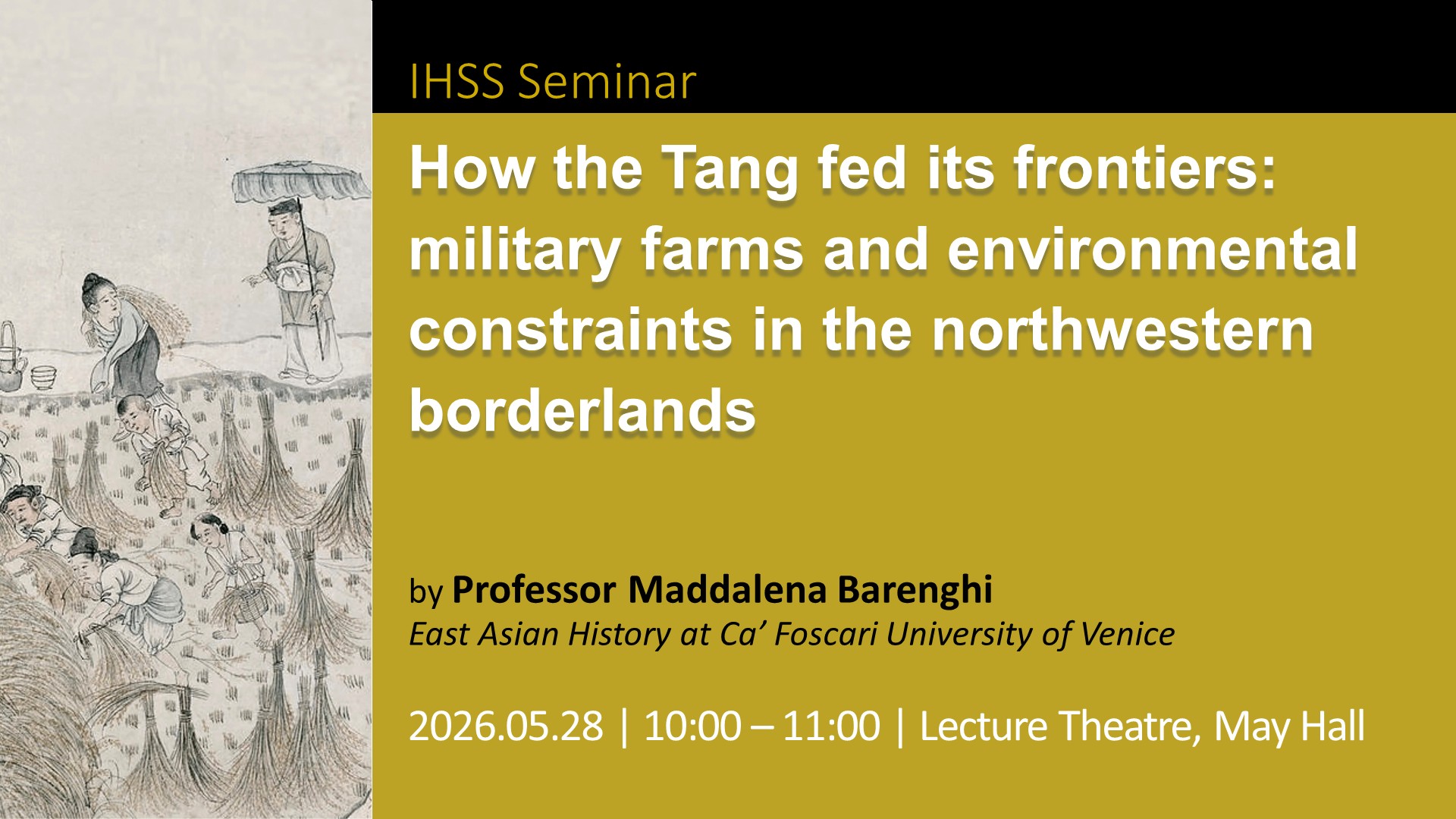
How the Tang fed its frontiers: military farms and environmental constraints in the northwestern borderlands

G01, May Hall, The University of Hong Kong

Description During the first millennium of imperial history, East Asian empires expanded into the semi-arid zones of Inner Asia and established agricultural settlements to sustain frontier garrisons. Under the tuntian system, soldier-farmers cultivated land to provision troops and livestock. A comprehensive analysis of how this agricultural system operated and its limits, accounting for environmental and […]

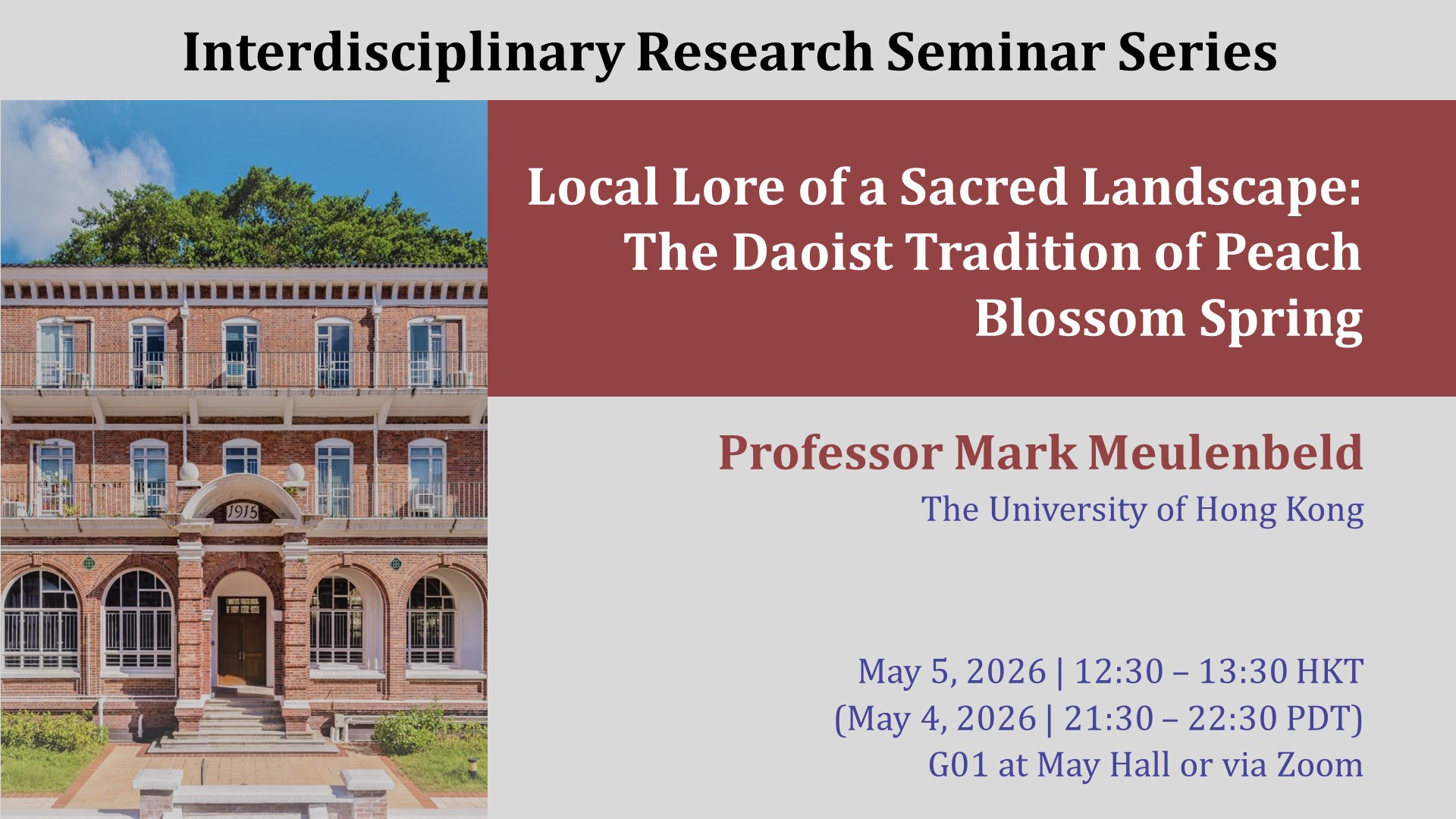
Local Lore of a Sacred Landscape: The Daoist Tradition of Peach Blossom Spring

Lecture Hall, G/F, May Hall, The University of Hong Kong, or Via Zoom , Hong Kong

ABSTRACT Daoist priests in central and northern Hunan Province (PRC), an area known as Plum Mountain (Meishan 梅山), are the custodians of many local traditions. Among them is an ancient and elaborate ritual dedicated to a sacred site famous since medieval times: Peach Blossom Spring (Taohuayuan 桃花源), or Peach Spring Grotto (Taoyuandong 桃源洞), locally also […]

Recasting the National Fengshui Master: Local Knowledge, Textual Authority, and Centralized Order in the Ming Dynasty (1368-1644)

201, May Hall, The University of Hong Kong, or Via Zoom

ABSTRACT This talk investigates how local constructions of the “national fengshui master” (guoshi 國師) reshaped geomantic discourse in the Ming in ways that indirectly reinforced the imperial model of centralized control. Before the fourteenth century, guoshi referred primarily to Buddhist and Daoist court preceptors. In Ming local writings, however, the title was retrospectively applied to […]

Entrepreneurship and Leadership in the Finance Profession: A Fireside Chat

G01, May Hall, The University of Hong Kong

ABSTRACTSuccessful entrepreneurs learn to grow and adapt to different situations and environments as they build their start-ups in an evolving world. Leadership is important in bringing together different parties with different interests to achieve a singular goal. For this iteration of the HKU Family Wealth Lecture Series, we bring a veteran entrepreneur, who started a […]

A Question of Legacy: Are Asian and European Family Offices Fundamentally Different?

G01, May Hall, The University of Hong Kong

ABSTRACTFamily offices are not a one-size-fits-all solution. Their structure and strategy are deeply influenced by two powerful forces: the generation of wealth they serve and the geographic culture they emerge from. As Asian wealth matures and European dynasties continue, a critical question arises: How do the investment strategies and governance models of these families diverge, […]

Hong Kong Dollar: Mediating China’s Participation in Global Capitalism since the Nineteenth Century

Rm 201, May Hall, The University of Hong Kong (Map), or Via Zoom

As a Western foothold at the southern tip of China, Hong Kong has played a crucial role as China’s interface with the rest of the world since the nineteenth century. The appeal of Hong Kong must be understood within a broader regional and national context.

Sports as Method: An Alternative Approach to Study Chinese Tradition and Civilization 體育作為方法: 另一個角度看中國文明傳統

201, May Hall, The University of Hong Kong, or Via Zoom

BRIEF INTRODUCTION這並不是一本就體育談體育的書,而是體育的文化史、文明史和文化交流史。它意欲借助體育來解讀中國文明特性,揭示中外文明互鑒、交流,彰顯中國與其他文明「共有」的歷史、共同的旅程。

Entrepreneurial Giving Empowers People & Communities

Lecture Hall G/F, May Hall, The University of Hong Kong,, Hong Kong

ABSTRACTIn this session, we are thrilled to hear from Joy Lo Cheung, Chairwoman of Lo Kwee Seong Foundation, on her family’s evolving philanthropy strategy, on women’s philanthropy, and on the future of philanthropy in Asia. Joy’s grandfather, Dr. Lo Kwee Seong, CBE, JP, was a Hong Kong entrepreneur, art collector, and philanthropist who founded Vitasoy, […]

Knowledge for Lineage: Queen, Keju and Social Mobility in Tang China

Rm 201, May Hall, The University of Hong Kong (Map), or Via Zoom

This paper examines the transition from limited to open-access societies, focusing on early and high-Tang China (618–906). Using a dataset of 1,200 marriages from 618 to 755, we find that Empress Wu’s rise to power in 674—the first and only female emperor in Chinese history—positively impacted upward mobility. After 674, men from common and poor clans were more likely to marry into elite clans. This increase in inter-class marriages was primarily driven by Empress Wu’s expansion of national civil examinations, which strengthened her legitimacy and created new opportunities for social advancement.

True Colors of China: Yellow, Blue, and Red

Rayson Huang Theatre, HKU

ABSTRACTContrary to perceptions of Chinese culture as static or monolithic, Professor Yu Xie of Princeton University argues that it is profoundly dynamic, multilayered, and continuously evolving. In his latest work, Professor Xie proposes that contemporary Chinese culture emerges from the synthesis of three foundational sources, each with distinct historical and ideological origins. To distinguish these […]

Wealth Transfer in China: Insights from an Institutional Investor 中國家族財富傳承—來自機構投資者的觀察

G01, May Hall, The University of Hong Kong

ABSTRACT中國正處於財富代際傳承的新階段,家族企業在治理、繼任與價值延續方面面臨新的思考與選擇。CPE源峰將結合研究與實踐,分享對家族傳承的觀察,探討如何以長期、穩健的方式協助家族實現可持續發展。 ABOUT THE SPEAKER劉樂飛先生– 畢業於中國人民大學經濟學,並取得中歐國際工商管理學院工商管理碩士學位 – 現任 CPE 源峰董事長兼 CEO – 曾任中國人壽保險股份有限公司首席投資執行官 – 曾任中國人壽保險股份有限公司投資管理部總經理 – 曾任中信產業基金董事長 – 曾供職於中國國家財政部綜合司 – 中華人民共和國第九屆、第十屆、第十一屆全國青聯委員

Studying Elite Politics through Conversation Networks: Elite Conflicts and the Making of the Chinese Reform

201, May Hall, The University of Hong Kong, or Via Zoom

ABSTRACTIn this talk, I propose a new approach to studying elite politics by focusing on changes in network structures that emerge from elites’ informal conversations. I apply this method to solve two interrelated puzzles from China’s early reform era (1977-1992): on one hand, why did intense political conflicts frequently occur (often among reformers) despite their […]

Crafting Everyday Food edited by Angela Ki Che Leung and Hallam Stevens

4.36 Run Run Sjaw Tower, HKU

ABSTRACTFocusing on the making of everyday foods in East Asia from the 19th century to the present, Crafting Everyday Food highlights the role of technology in transforming traditional foods into modern commodities and in reinventing industrial foods as heritage foods. The seven expert researchers adopt a unique technological perspective to trace the transformation of traditional […]